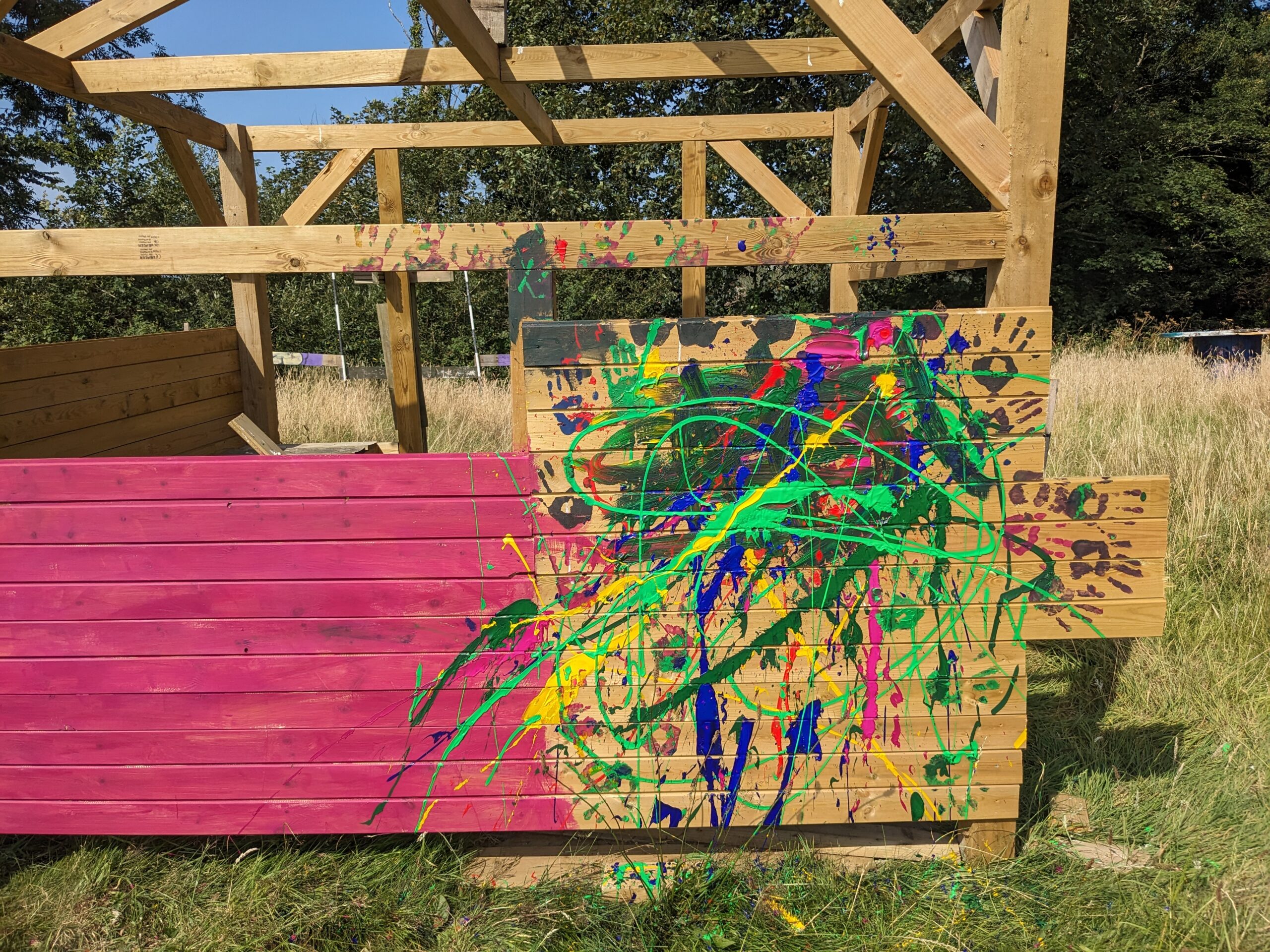
The Hobbit house is the fantastic starting point, a real “Bilbo’s house” vibe!
Themed Props & Decoration
“Found” Objects
We are going to place interesting, but safe, objects strategically inside or just outside the Hobbit house. Think a slightly worn (but clean) “ancient” looking map, a “lost” compass, a collection of unique stones, a single, smooth “dragon’s egg” (a large, painted stone), or a small, intricately carved wooden animal. These act as story starters.
Mysterious Chest/Box
A small, weather-resistant wooden chest or box with a simple latch. What’s inside? It could be empty, allowing their imagination to fill it, or contain a single cryptic “clue” like an old feather or a piece of “parchment” (aged paper with a symbol).
Round Door & Windows
Emphasise the iconic round door and windows. You could even have a small, very quiet bell beside the door, like Bilbo’s.
Cozy Seating
Beyond the fire pit, inside the Hobbit house, have comfortable (but durable) cushions or low benches to create an inviting atmosphere for sharing stories.
Fire Pit Prompts
“Story Stones” or “Story Sticks”
We will have a collection of smooth stones or flat wooden discs, each with a simple image or symbol painted on it (a tree, a moon, an animal, a mysterious eye, a sword, a key). Young people can pick a few at random and weave a story around them as they sit by the fire. Similarly, sticks could be decorated or have symbols carved into them.
Atmosphere Enhancers
Simple, battery-operated fairy lights strung in a safe way around the Hobbit house or fire pit area will add to the magical, enchanting feel, especially as dusk falls.
Elements for Story Making in the Small Woodland
The woodland itself is a canvas for imagination.
“Whispering Woods” Features
Wind Chimes/Sound Makers
We will place subtle wind chimes or other natural sound makers (e.g., hanging shells or hollow bamboo pieces) in various spots in the woodland. These will add to the ambiance and can inspire stories about unseen presences or the “voice” of the woods.
Nature’s “Faces”
We can encourage them to find faces or figures in tree bark, roots, or oddly shaped branches. These can become characters in their stories.
Designated “Listening Posts”
Simple benches or logs at various points where they can sit quietly and listen to the sounds of the woodland, prompting observation and imaginative thought about what those sounds mean in a story.
Pathways & Discoveries
“Secret” Paths
Not a lot of space but we will try to create winding, slightly less obvious paths through the woodland that lead to unexpected discoveries.
Small, Themed “Nooks”
Fairy/Gnome Doors
We can attach small, whimsical, non-opening doors to the base of trees or amongst roots. These suggest hidden worlds and tiny inhabitants.
Miniature Houses/Structures
We will build very small, simple structures from natural materials (twigs, moss, bark) that could be homes for mythical creatures.
“Enchanted Circle”
A small clearing marked by a circle of stones or logs, suggesting a place where magic might happen or stories are traditionally shared.
A “Wishing Tree” or “Ribbon Tree”
A designated tree where visitors can tie a small piece of fabric or string with a written wish or a single word that could become a story prompt.
Sensory & Interactive Elements
Texture Path
A short section of path where different natural textures are incorporated (e.g., bark chips, smooth pebbles, sand) to engage their sense of touch and inspire descriptive language.
Scented Plants
Plant some aromatic herbs or flowers in safe, accessible spots (e.g., wild mint, camomile) to add another sensory layer.
“Nature’s Gallery”
Create a simple frame or two from branches, inviting young people to “frame” a natural scene and imagine the story behind it.
Blank Storyboards/Chalkboards
Place a few weather-resistant boards (perhaps made from salvaged wood painted with chalkboard paint) in sheltered spots where they can draw or write short story ideas or characters using chalk.
Encouraging the Process
Open-Endedness
The key is for us to make these elements suggestive, not prescriptive. Don’t tell them what story to make, but give them the tools and environment to create their own.
“What If?” Prompts
To help we will consider placing a few subtle signs (weatherproofed) with “What if…?” questions near certain features. For example, near a particularly gnarled tree: “What if this tree could talk?” or near a small, winding stream: “Where does this stream really begin, and what secrets does it carry?”
Journaling/Sketching Spots
We will provide a few comfortable, sheltered spots where young people can sit with a notepad and pencil to jot down ideas or sketch what they see, encouraging reflection and creativity.
Story Swap Sessions
Once the area is built, we could organise sessions where they are encouraged to share the stories they’ve imagined within the space. The fire pit would be perfect for this!
Or even better…. plays, and fun elements where we include food and drama!