Brachiosaurus Migration

Building a farm at Fowey River Academy

Tag: Dinosaurs

  • Living with the Dinosaurs Part 3

    Living with the Dinosaurs Part 3

    The Great Migration (The Atlantic Crossing)


    The first sign wasn’t the birds or the silence, but the water. One morning, Anna came back from her swim, her teeth chattering more than usual, complaining the lake was “down a good foot.” Then, the ground began to hum—not the sharp vibration of a T-Rex, nor the rhythmic thrum of a Sauropod herd, but a low, continuous rumble that seemed to emanate from the very earth beneath our huts.

    Rosie, our animal healer and the village’s unofficial elder, called a council. “The Grandest of the Long-Necks are stirring,” she announced, her voice grave. “It’s been fifty years, almost to the day. The Atlantic Crossing is upon us.”

    Whispers rippled through the gathering. Everyone knew what that meant. Every half-century, the truly colossal herds—beasts so immense even Rachel looked like a calf—would migrate from the deep south, through our valley, and to the ancestral nesting grounds by the sea. And their traditional path, etched by generations of gargantuan feet, led directly through the heart of our village.

    “We must build barricades!” cried Thomas, usually the most laid-back of the men, but now his face was etched with fear. “Spikes! A diversion!”

    “Foolishness!” Rosie snapped, slamming her staff against the ground. “You try to divert a living mountain, you’ll just make it angry. And then our huts won’t be merely trampled; they’ll be scattered kindling!”

    That night, the debate continued in our hut. Anna was pacing, worry creasing her brow. “We can’t just let them walk through. Our homes, our supplies… even if they’re careful, one misplaced foot could destroy everything.”

    “But they’re not trying to hurt us,” Abi piped up, ever the dinosaur advocate. “Remember the baby Brachiosaurus? And Rachel with Mia?”

    “Abi has a point,” I said, looking from Anna to the girls. “We’ve learned to live with them, not against them. Maybe… maybe we can guide them.”

    The idea was outlandish, even for our village. But with Rosie’s support, and after much heated debate, our family’s proposal was put to the test. Instead of barricades, we would build a “Great Guiding”—a wide, smoke-lined highway through the centre of the village. For days, every able-bodied villager moved their wood-burners, their cooking fires, and anything that could produce smoke, lining the route. We emptied huts, stacked supplies high, and even moved the MacDonald’s barbecue pit into a safe zone.

    “It’s a gamble,” Anna admitted, watching a line of smoke rise from what used to be our communal dining area. “But it’s better than becoming prehistoric roadkill.”

    The air grew heavy, the constant hum of the ground growing stronger. Storm was restless, constantly whining, not barking, as if sensing the sheer scale of what was coming. Midnight, for once, was nowhere to be seen.

    Then, the sky turned bruised, and the first fat drops of rain splattered onto the leaves. A true Atlantic gale was brewing, the kind that had brought Storm to our door. Just as the wind began to howl, pushing the smoke from our guiding fires sideways, the first of them appeared at the valley’s entrance.

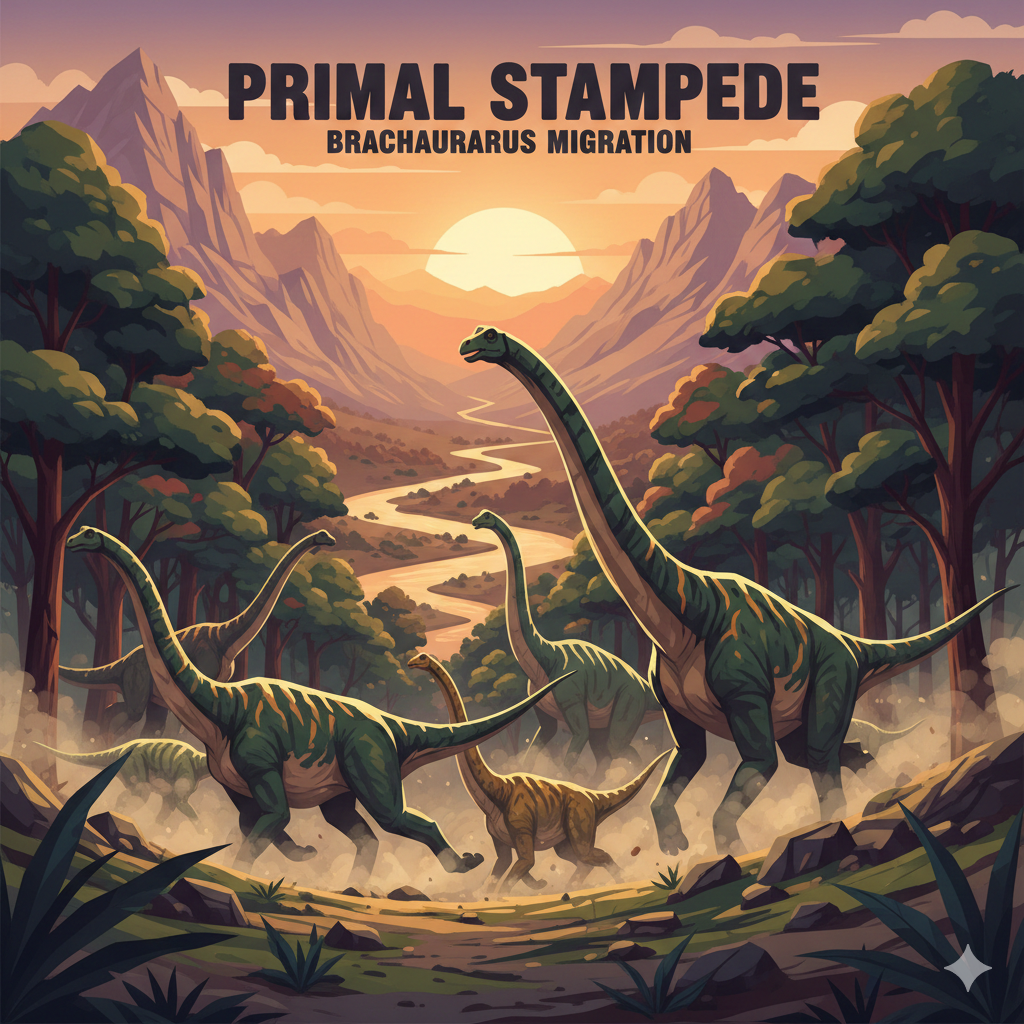
    They weren’t just big; they were immense. Their heads were lost in the low-hanging clouds, their skin like ancient, moving rock formations. The ground trembled with each step, a deep, resonant bass note that vibrated through your bones. The leading beasts hesitated, confused by the shifting smoke and the howling storm.

    “Now!” I yelled over the wind. “Light the flares! Sound the calls!”

    Abi and Mia, fearless in the face of these giants, grabbed specially prepared torches. Guided by the unique calls Storm was making—a series of low, guiding whines and barks, almost conversational—they ran ahead, waving the flames along the designated path. The combined scent of a hundred wood-fires, now intensified by the storm, created a swirling, fiery tunnel.

    The lead Brachiosaurus paused, its colossal head dipping. It seemed to assess the path, the smoke, and the tiny, flaming creatures waving below. Then, with a slow, deliberate step, it moved. One by one, the grand herd followed, a river of ancient life flowing through our village. The storm raged, rain lashed down, and the wind screamed, but the guiding fires, fed by every man, woman, and child, held fast.

    We watched, awestruck and terrified, as the giants passed. Huts swayed, mud splattered, and the ground was a constant tremor. But not a single hut was crushed. The beasts seemed to understand, their immense feet falling deliberately between our precious homes. It was a dance between giants and ants, played out in the heart of a prehistoric storm.

    By dawn, the last of the Grandest of the Long-Necks had vanished into the Atlantic mist, leaving behind only colossal footprints and the lingering scent of damp earth. The storm had passed, leaving a rainbow arching over our valley.

    As we surveyed the mud and damp, a cheer erupted. Where the largest of the Brachiosaurus had paused, a new spring of crystal-clear water bubbled up from the ground, sparkling with a faint, metallic sheen. Rosie knelt, tasting the water, then scooping up a handful of the soil. “Tin!” she cried. “A rich vein of Cornish tin! A gift from the Ancients!”

    That night, the village celebrated. Not just for surviving, but for triumphing with cooperation. Donald and Mac fired up their barbecue, and even I, a staunch vegetarian, found myself laughing and sharing a tale or two. As I watched Abi and Mia dance around the fires, holding hands with their friends, I knew our family—our unique, dinosaur-friendly, shorts-wearing, pizza-loving family—had found our true place in this wild, wonderful, prehistoric Cornwall. We didn’t just hang out with the dinosaurs; we lived as one with them.
  • Living with the Dinosaurs Part 2

    Living with the Dinosaurs Part 2


    The Shadow in the Valley

    It happened on a Tuesday, just past noon. The girls and I were about two miles from the safety of the hundred huts, picking wild garlic near the base of the Great Slate Ridge. The air was heavy, the kind of humid Cornish heat that makes your shirt stick to your back, but the woods were unusually lively. Then, in the space of a heartbeat, the world went dead.

    The birds didn’t just stop singing; they fled. I heard the frantic flutter of wings heading south, and then, a silence so heavy it made my ears ring.

    Beside me, Storm froze. She didn’t tilt her head left or right. Her hackles rose, and she let out that single, sharp bark that turned my blood to ice.

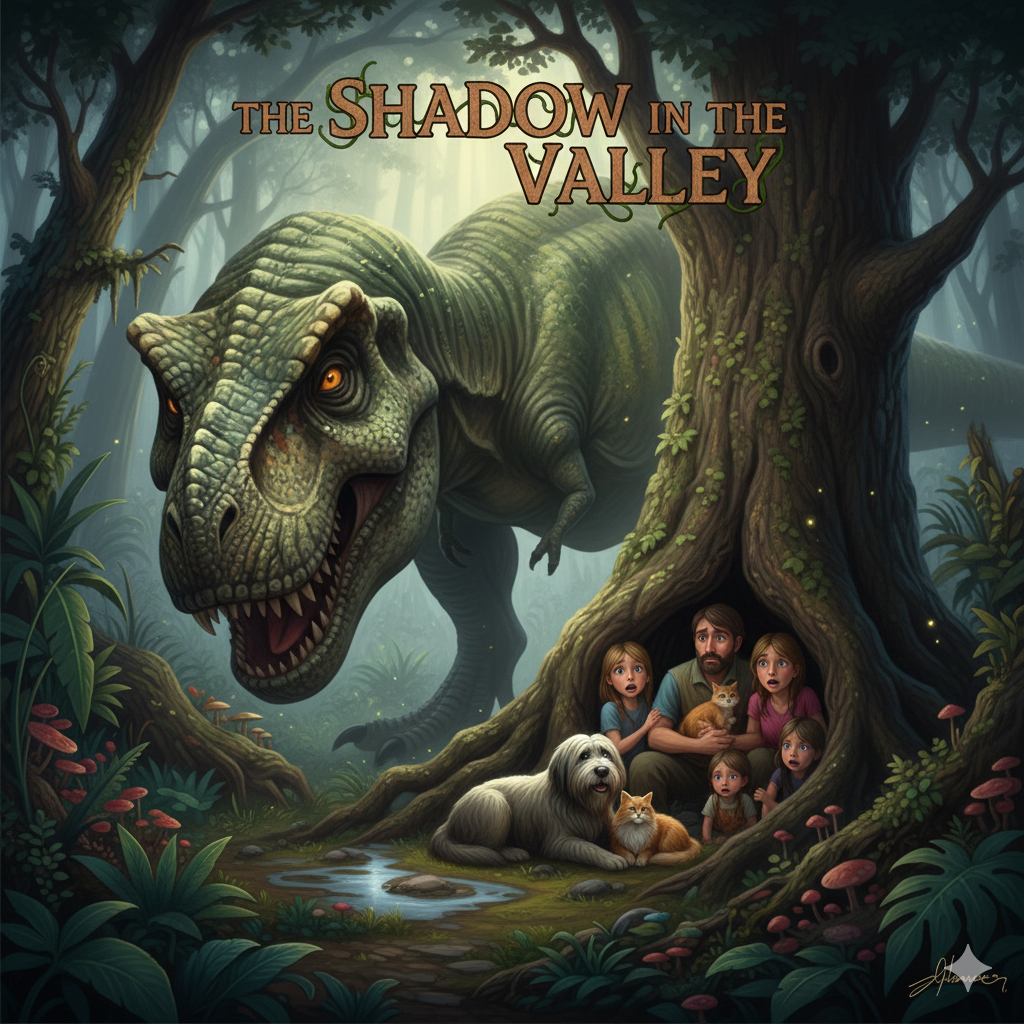
    “Into the hollow. Now,” I whispered. I didn’t have to tell the girls twice. We scrambled into a natural dip beneath the roots of an ancient, gnarled oak.

    Then came the vibration. It wasn’t the rhythmic drumming of the Sauropods that made the tea ripple; this was a heavy, deliberate thud that seemed to punch the ground. Thump. Pause. Thump.

    We saw him through the break in the ferns. He was a nightmare draped in pebbled, swamp-green skin. The T-Rex didn’t walk so much as he possessed the space he moved through. He was nearly forty feet of muscle and teeth, his head level with the lower branches of the trees. Every time his foot hit the earth, the ferns bowed.

    Mia gripped my hand so hard her knuckles were white. Abi was watching with wide, terrified eyes, her breath coming in tiny, silent hitches. Even Midnight, tucked inside my tunic, had turned into a motionless lump of fur.

    The beast stopped ten yards from our oak. He tilted his massive head, his amber eye searching the shadows. He opened his maw slightly, and the smell hit us—the metallic tang of old blood and the musk of a predator. He let out a low, guttural chortle that vibrated in my very teeth.

    Then, he roared.

    It wasn’t just a sound; it was a physical force. It hit my chest like a wave, a primal scream that claimed the entire valley for his own. I felt the oak tree shiver behind us. I closed my eyes and prayed to the Lord, silent and still, feeling like an ant beneath the boot of a giant.

    The Rex lingered, sniffing the air. He caught the scent of the village woodsmoke clinging to our clothes—the scent that told him we were the small, upright creatures who carried the “stinging sticks.” He let out a frustrated hiss, a sound like steam escaping a pipe, and turned.

    We stayed in that hollow for an hour after the thuds faded. My legs felt like jelly when we finally stood up.

    “Dad?” Mia whispered, shaking the dust from her shorts.

    “Yes, love?”

    “I think I prefer Rachel the Sauropod.”

    “Me too, Mia,” I breathed, clutching my garlic basket like a shield. “Me too.”

    As we hurried back toward the smoke of the hundred huts, Storm stayed glued to my heel. We didn’t talk much the rest of the way. We just wanted to get home to Anna, the stove, and a world where the only thing roaring was the wind off the Atlantic.


  • Living with the Dinosaurs Part 1

    Living with the Dinosaurs Part 1


    Hanging Out with the Dinosaurs

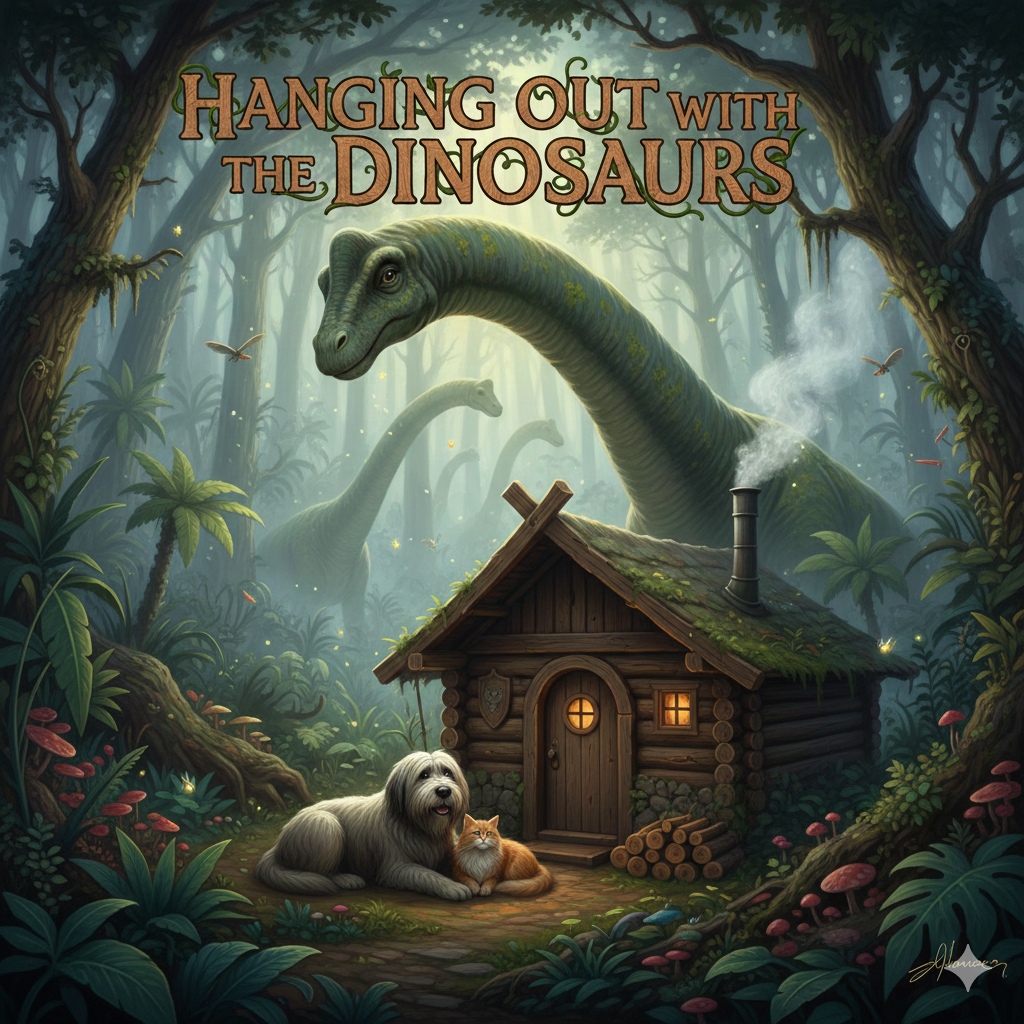
    The morning mist over the Cornish woods was thick enough to hide a Brachiosaurus, though you’d still hear the rhythmic thud of its feet long before you saw its head peaking through the canopy. Inside our timber hut, the wood-burner was crackling. Midnight, our cat, was curled by the embers, seemingly indifferent to the fact that a T-Rex had roared just three miles to the east at dawn.

    As a tribe, we’d discovered that the scent of woodsmoke acted as a sort of prehistoric “Keep Out” sign; it kept us alive. This morning, I was on watch, perched on a platform built high above the treeline. Swaying in the Atlantic wind usually made me feel a bit nauseous, but I preferred it to the alternatives. I wasn’t built for hunting, and I certainly didn’t have the “green fingers” of our gardeners, who wove a curious magic to pull food from the soil. Some of their crops, like the tomatoes, tasted like bottled sunshine; others, like the lettuce, just tasted like the ground.

    Our village consisted of around a hundred huts. We’d settled here in the deep woods after our previous home was flattened in a Sauropod stampede. Curiously, the woodland afforded us a unique protection. Those long-necked giants would wander to the edge of the treeline to snack on the canopy, but they never ventured inside.

    On quiet afternoons, I’d take Abi and Mia climbing. If we were lucky, a herd would wander by, their massive legs creating a drumming vibration that made our water tanks hum. If you had a mug of tea or a glass of cider on the table, the liquid would ripple like a stream, the glass dancing toward the edge of the table until someone caught it.

    Abi loved the “Long-Necks” best. She’d climb to the very end of a branch just to reach out and touch a passing hide. Mia, having fallen once, was more cautious. She’d been saved by a Sauropod we now call Rachel, who caught the girl in her massive mouth and gently deposited her back onto the branch. Mia was safe, of course, though she was dripping with prehistoric saliva and smelled remarkably like poo.

    Anna always started her day with a swim in the lake. Even with snow on the ground, she’d dive in, claiming it “set her up for the day.” Personally, I only bathed once a month—it was far too cold for me! Anna was the heart of the hut; she’d knit, sew, and cook the best pizza in the valley. She once set the whole village gossiping when she tailored what she called “shorts”—trousers without the legs. I wore them out one day and became the talk of the woods. Until then, it had been full-length furs or nothing.

    Our dog, Storm, had a strange way of alerting us to the neighbours. She’d tilt her head one way for a Sauropod, another for a Brachiosaurus, and let out a single, sharp bark for a Tyrannosaurus Rex. Those “killing machines” were the only dinosaurs we hunted; they were the village’s main meat dish. Being a vegetarian myself, I usually skipped the village barbecues run by a husband-and-wife team. The wife was known as Mac and the husband as Donald. People would say they were going to a “MacDonald’s” for a burger. The name never did sit right with me.

    Often, the silence was the worst part. The birds would go quiet, the insects would stop their chirping, and then, across the valley, the roar would come. It vibrated through the Cornish slate, sounding louder and more intimidating than any thunderstorm. If you were out, you stood perfectly still. If you were in the village, you ran for the nearest shelter. In those moments, I felt like I could hear the very trees whispering at us to stay motionless.

    We held a special bond with the Brachiosaurus herd ever since the girls rescued an injured baby. The village men laughed at the idea of “nursing” a dinosaur, but at night, when I couldn’t sleep, I’d often find myself sitting and talking to the wee fellow. Usually, I wasn’t alone; Thomas, Olly, Oliver, and Richie would be there too, pretending they were just passing by. (Miley would have been there as well, but he’d managed to fall down a hole again). When we finally returned the calf to its parents, the delight was hilarious. They trumpeted and danced, making the very earth beneath our feet skip with joy.

    The only real danger, aside from the odd T-Rex, were the Atlantic storms. In fact, that’s how Storm got her name. She’d arrived at our back door during a gale, whimpering and wet. Midnight wouldn’t stop scratching at the door until we let the dog in, but then they both started a high-pitched whining that could be heard over the wind. Sensing something was wrong, we decided to take Storm over to Rosie, our animal healer.

    We were barely ten feet from the hut when a massive oak tree crashed down, demolishing our home. If we’d waited thirty seconds more, it would have been the end of us.

    And that is my family—dinosaurs, shorts, pizza and all. Now, if you’ll excuse me, I’m taking the girls to a MacDonald’s. I still say that name will never catch on!