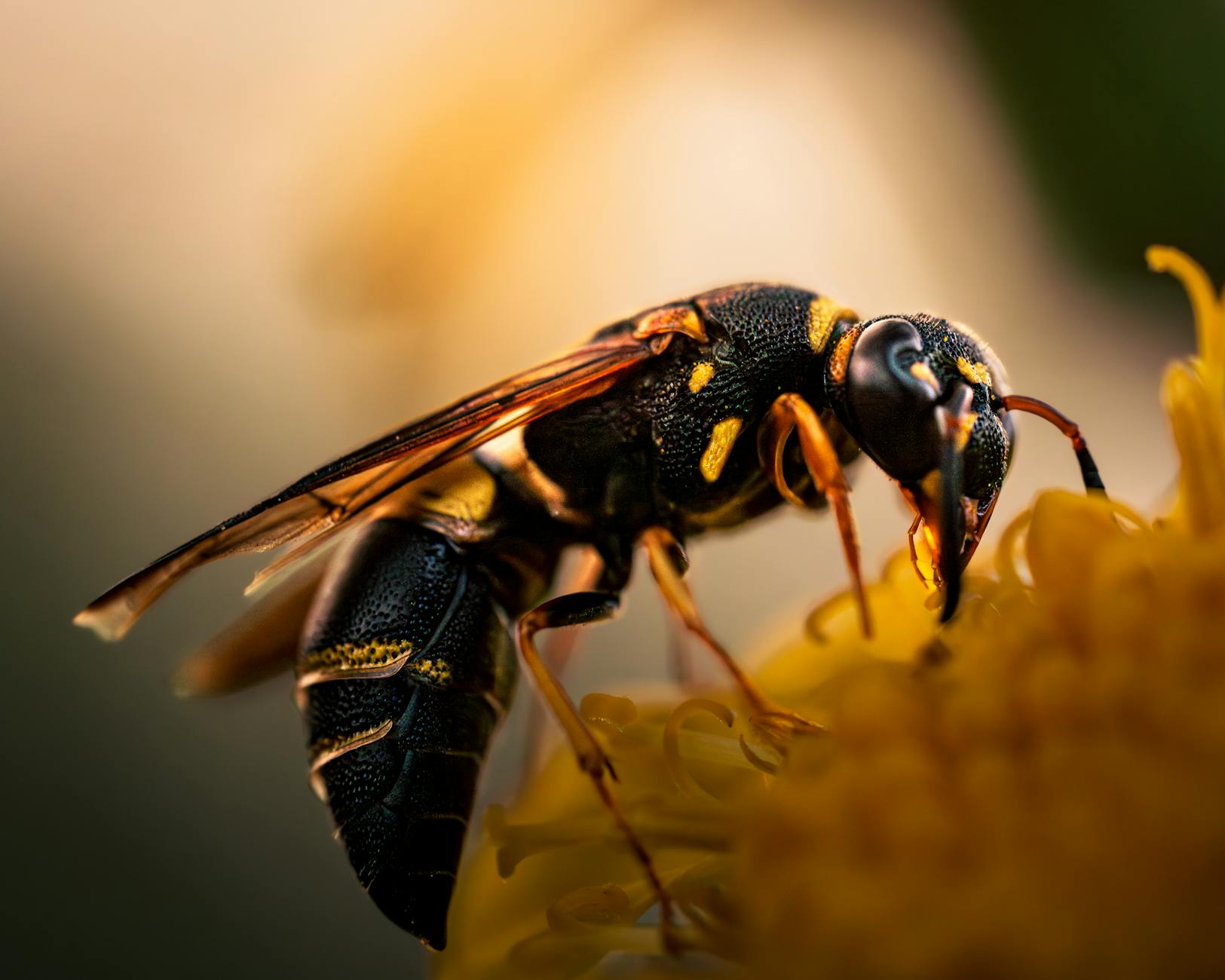
close up of a wasp on a yellow flower

Building a farm at Fowey River Academy

Category: Stories

Stories are narratives, accounts of connected events, real or imagined, that convey meaning and evoke emotions. They can take many forms – from simple anecdotes and folk tales to complex novels and films – and serve various purposes, including entertainment, education, preservation of cultural heritage, and exploration of human experience. At their core, stories provide structure to our understanding of the world, offering insights into human nature, relationships, and the challenges and triumphs of life.

  • Two Girls and a Wasp

    Two Girls and a Wasp

    (Verse 1)
    Yo, check it, me and my girl Gracie,
    Guides representin’ Campin’ trip was over, homeward bound, adventurin’
    Backpack on my shoulders, singin’ songs, feelin’ bold
    But then a wasp appeared, buzzin’ ’round, lookin’ cold
    He followed us onto the bus, we tried to stay chill
    But that stripy dude was persistent, givin’ us a thrill
    Gracie started screamin’, I said, “Yo, keep it down low!”
    This wasp ain’t gonna sting us, just let the homie go

    (Refrain) Don’t pull my hair, wasp, don’t pull my hair, wasp
    Just buzzin’ on by, wasp, don’t pull my hair, wasp
    We’re peaceful Guides, wasp, with badges and sashes
    No need for that stinger, wasp, just cool your dashes

    (Verse 2)
    First stop, Bodmin Gaol, historic and kinda creepy
    Wasp followed us inside, this dude was super sneaky
    We learned about prisoners, the cells and the trials
    But that wasp was distractin’, doin’ aerial spirals
    He checked out the courtyard, the gallows, the grim scene
    Then buzzed past the gift shop, like “Yo, this place is mean!”
    Next stop, McDonald’s, we were starvin’ for sure
    Wasp hovered by the counter, like “Gimme a Big Mac, or I’ll lure!”

    (Refrain)
    Don’t pull my hair, wasp, don’t pull my hair, wasp
    Just buzzin’ on by, wasp, don’t pull my hair, wasp
    We’re peaceful Guides, wasp, with badges and sashes
    No need for that stinger, wasp, just cool your dashes

    (Verse 3)
    We got our burgers and fries, sat down by the window seat
    Wasp chilled on the table, lookin’ for somethin’ sweet
    He eyed up my milkshake, I said, “Nah, man, back off!”
    Gracie threw him a fry, he caught it, then took off
    He flew out the window, into the Cornish sun
    Our little wasp buddy, his adventure had begun
    We finished our meal, headin’ home, feelin’ glad
    That crazy wasp journey, the wildest trip we had!

    (Refrain)
    Don’t pull my hair, wasp, don’t pull my hair, wasp
    Just buzzin’ on by, wasp, don’t pull my hair, wasp
    We’re peaceful Guides, wasp, with badges and sashes
    No need for that stinger, wasp, just cool your dashes Word up!

  • Mia

    Mia

    Mia Lowen wasn’t your average teenager. While “MIA” usually meant “Missing in Action,” for Mia, it stood for “Misses in Action.” Not because she was lost or hiding, but because she was always on the move, spreading joy and laughter wherever she went. Her middle name, Lowen, seemed perfectly fitting, as it meant “lion” in Cornish, and Mia certainly possessed a lion’s share of courage and enthusiasm.

    Mia had a knack for finding those who were downcast, those who needed a spark of joy in their day. Armed with a contagious smile, a quick wit, and a heart full of compassion, she’d swoop in like a ray of sunshine, leaving a trail of laughter and smiles in her wake.

    One day, she spotted Mr. Trevelyan, the grumpy old shopkeeper, scowling at a wilted lettuce. Mia, with a twinkle in her eye, marched right up to him and declared, “Mr. Trevelyan, that lettuce needs a pep talk! Maybe a little song and dance routine?” Before the bewildered shopkeeper could protest, Mia had launched into a silly jig, singing an improvised ode to the sad vegetable. Mr. Trevelyan, despite his best efforts to maintain his frown, couldn’t help but chuckle. The lettuce might have been beyond saving, but Mia had certainly brightened his day.

    Another time, she encountered Mrs. Penhale, the librarian, looking overwhelmed by a mountain of overdue books. “Don’t worry, Mrs. Penhale!” Mia announced, “I’ll be your book-wrangling assistant!” She proceeded to organise the books with impressive efficiency, all while regaling Mrs. Penhale with hilarious anecdotes and silly jokes. By the time they were finished, the books were neatly stacked, and Mrs. Penhale was beaming.

    Mia’s “Misses in Action” missions weren’t limited to her small town. She’d leave encouraging notes on park benches, hand out compliments to strangers, and even organise impromptu dance parties in the supermarket queue. Her infectious enthusiasm was impossible to resist, and even the most hardened cynics found themselves smiling in her presence.

    Some people called her eccentric, some called her a whirlwind, but everyone agreed that Mia Lowen was a force of nature, a joyful disruptor who made the world a brighter place, one smile at a time. She was a reminder that sometimes, all it takes is a little bit of kindness, a dash of humour, and a whole lot of heart to make a real difference in the lives of others. And in a world that often felt too serious, Mia Lowen, the “Misses in Action,” was a much-needed breath of fresh air.

  • Unhaircut

    Colin had always been an excellent hairdresser. Brilliant, and definitely not average. But things were about to change… Mrs. Higgins came in for a trim. “Just an inch off the ends, dear,” she’d said, her voice a warble. Colin, distracted by a particularly stubborn knot, snipped off what he thought was an inch. But when he combed it out, Mrs. Higgins’ hair was longer, not shorter.

    Confused, he tried again, this time meticulously measuring two inches. Snip. The hair sprung back, two inches longer than before. He tried again, and again, each snip resulting in more hair, not less. By the time Mrs. Higgins left, her hair trailed behind her like a bridal train.

    Word of Colin’s “miracle touch” spread like wildfire. Women, and even some men, flocked to his salon, eager to experience the inexplicable phenomenon. “Chop off six inches, Colin!” they’d cry, “I want Rapunzel hair!”

    And Rapunzel hair they got. The once ordinary town of Little Hadleigh was transformed into a fairytale spectacle. Hair flowed down the high street like a river of silk and keratin. Women used their lengthy locks as skipping ropes, dog leashes, even impromptu washing lines. Men with flowing manes swung from lampposts, their hair acting as convenient grappling hooks.

    Colin, initially thrilled by his newfound fame, soon grew weary. Everywhere he went, people would shout, “Colin! Climb up my hair!” Children would use his legs as climbing frames, their tiny hands tangling in his own increasingly long hair. He yearned for the days when a simple “short back and sides” was the most exciting request he received.

    One day, a mysterious woman in a long, hooded cloak entered his salon. “I hear you have a gift,” she rasped, her voice like dry leaves rustling in the wind.

    “It’s more of a curse,” Colin muttered, trying to untangle a woman’s hair from the ceiling fan.

    The woman chuckled, a dry, brittle sound. “I can help you control it,” she said, “but it will come at a price.”

    Desperate, Colin agreed. The woman revealed herself to be a centuries-old sorceress, cursed with eternally growing hair. She transferred the curse to Colin, but with a twist. He could now control the growth, making hair longer or shorter with a mere thought.

    The sorceress, now with a sensible bob, skipped out of the salon, leaving Colin to his new reality. He could still give people the long hair they craved, but now he had the power to reverse it, to bring some semblance of normalcy back to Little Hadleigh.

    However, Colin had learned his lesson. He started charging exorbitant prices for his services, and only worked on Tuesdays and Thursdays between 2 pm and 4 pm. He even introduced a strict “no climbing” policy. After all, he was a hairdresser, not a jungle gym.

  • Elara

    Elara was known for her eyes. Not their striking beauty, though they were indeed remarkable – dark brown, large, and luxurious, like pools of melted chocolate. No, Elara was known for what those eyes could do. They held a terrifying power, a deadly curse. If you stared into their depths for too long, you were lost. Drawn in, mesmerised, until Elara closed her lids, and then the drowning began. 

    It wasn’t a physical drowning, not in the traditional sense. There was no water, no gasping for air, no struggle. Instead, it was a silent, insidious suffocation. The victim would feel a tightening in their chest, a growing pressure in their head, as if the very air was being sucked from their lungs. Their vision would blur, their limbs would grow heavy, and a sense of overwhelming panic would set in. Then, nothingness. When they were found, later, there would be no water in their lungs, no signs of a struggle. Just a peaceful expression on their face, as if they had simply fallen asleep. 

    The rumours about Elara spread like wildfire. Some called her a witch, others a demon. She became an outcast, feared and shunned by all who knew her secret. Elara herself lived in constant fear of her own power, terrified of the destruction she could unleash with a single glance. She longed for connection, for intimacy, but the risk was too great. The only way to escape her deadly gaze was to avoid eye contact altogether. A fleeting glance, a quick aversion of the eyes, that was all one could afford. But even then, the danger lingered, a silent threat lurking beneath the surface of those captivating eyes. For Elara’s power was not just in her gaze, but in the fear it inspired, the knowledge that a single moment of weakness, a single lapse in vigilance, could be your last.

  • The Silence Defeated

    The Silence Defeated

    The whirring of the generator was deafening in the cramped bunker, but it was a symphony compared to the chilling silence that had enveloped the world. The Silence, creatures that hunted by sound, had decimated humanity. Any whisper, any rustle, was a death knell, drawing the swift and brutal predators.

    Inside this bunker, a small band of survivors, led by the ingenious engineer, Elara, had dared to fight back. For months, they had toiled, scavenging parts and piecing together a monstrous contraption that dominated their dimly lit sanctuary. It was a crude but effective machine, a giant guillotine that rose and fell with rhythmic precision. Wham-bam, the heavy blade sliced through the air, a defiant roar against the suffocating silence.

    The noise was a beacon, a siren song to the Silence. Drawn by the rhythmic thump, they converged on the bunker, their sleek, shadowy forms gliding through the desolate landscape. One by one, they entered the bunker’s reinforced entrance, lured into the gaping maw of the machine. Wham-bam, the blade fell, cleaving the creatures in two, their silent screams echoing only in the fading vibrations of their dismembered forms.

    The survivors, huddled in the shadows, watched with bated breath. Each successful strike was a victory, a defiant fist raised against the oppressive silence. Elara, her face grim but determined, monitored the machine’s operation, fine-tuning its rhythm, ensuring its deadly efficiency.

    News of their success spread through the whispers of surviving communities, carried on the winds of hope. Across the ravaged planet, others began to replicate Elara’s design, constructing their own guillotines, their own beacons of defiance. The silence was no longer a weapon but a lure, a means to an end.

    The tide began to turn. The Silence, once invincible, were now being systematically hunted, their numbers dwindling with every falling blade. The world was slowly regaining its voice, the sounds of human activity, of laughter and music, replacing the oppressive silence.

    It wasn’t easy. There were losses, sacrifices made in the fight for survival. But with each passing day, the whispers grew louder, the resistance stronger. The Silence, once masters of the world, were being driven back, their reign of terror coming to an end.

    The world was learning to speak again, and it was a sound of defiance, of hope, of victory. The Silence had been defeated, not by silence, but by the resounding wham-bam of humanity’s resilience.

  • Ben Eggy

    Ben Eggy

    Ben Eggy, as he would later be known, began his life in the humble confines of a beige, speckled egg. He spent his days, or what he perceived as days in the muffled darkness, rocking back and forth, contemplating the mysteries of the universe. “Why am I here?” he’d ponder, or at least, he would have if he’d developed the capacity for thought. Instead, he mostly just jostled about, getting increasingly impatient.

    One fine morning, with a mighty peck and a determined shove, Ben Eggy burst forth into the world, a damp, wobbly chick with wide, curious eyes. The world was a cacophony of clucking, pecking, and scratching, and he, a tiny ball of yellow fluff, was right in the middle of it.

    Life as a chick was all about eating, sleeping, and pooping, with the occasional frantic dash away from the overzealous rooster. He quickly discovered the joys of pecking at corn kernels, the sweet taste an explosion on his undeveloped palate. He also learned the art of the dust bath, the fine grains of sand tickling his downy feathers.

    As weeks turned into months Ben Eggy’s downy fluff gave way to sleek, white feathers. He sprouted a proud comb and wattle, and his voice, once a pathetic cheep, deepened into a respectable “cock-a-doodle-doo!” He discovered the thrill of chasing hens, though his initial attempts were often met with a flurry of indignant squawks and pecks.

    His first birthday was a grand affair. The entire coop was decked out with streamers made of colourful feed bags. There was a cake made of mashed corn and mealworms, and even a piñata fashioned from a hollowed-out gourd filled with tasty grains. Ben Eggy, the guest of honour, strutted about with a cocky air, accepting the adulation of his fellow chickens.

    But Ben Eggy yearned for more than the simple life of a farmyard rooster. He wanted to make others laugh. He started practicing jokes, observing the world around him and twisting it into punchlines.

    “Why did the human cross the road?” he’d squawk to a group of giggling hens. “To prove he wasn’t a chicken!”

    “What do you call a human who tells dad jokes?” he’d crow to his rooster buddies. “A comedi-hen!”

    His jokes were silly, his delivery awkward, but his infectious enthusiasm and goofy charm won over the farmyard crowd. He even started incorporating physical comedy into his act, his clumsy attempts at flying and his exaggerated strutting drawing roars of laughter.

    Word of the comedic chicken spread beyond the coop. Soon, farmers and their families would gather to watch Ben Eggy perform. He even caught the eye of a talent scout, who landed him a spot on a local television show.

    Ben Eggy, the once ordinary chicken, had become a stand-up sensation. He toured the country, performing in theaters and stadiums, his unique brand of farm humour delighting audiences of all ages. He even published a bestselling autobiography titled “From Coop to Comedy.”

    And it all started with a simple dream, hatched in a beige, speckled egg.

  • Pink Hair Horror

    Elara stared at her reflection, a deep frown creasing her forehead. “Just get it back to my natural colour,” she sighed, gesturing at the faded pink mess that was currently her hair.

    “No problem, love,” chirped Colin, the hairdresser, brandishing a colour chart like a weapon. “Back to that lovely chestnut brown, eh?”

    Two hours, a generous application of dye, a trim, and a bouncy blow-dry later, Elara gasped. Her hair shimmered in the salon mirror, a rich, glossy brown with natural highlights that seemed to catch the light. It was perfect. Better than perfect. It was like she’d stepped back in time.

    “Colin, you’re a miracle worker!” Elara beamed, reaching for her purse.

    But as she stood up, a strange tingling sensation washed over her scalp. She glanced back at the mirror, her heart plummeting to her stomach. Her hair was pink again. The vibrant, freshly-dyed brown had vanished as if it had never been.

    “What the—?” Colin’s eyes widened in disbelief. “Did you…did you use some sort of temporary spray or something?”

    Elara shook her head, bewildered. “No, I haven’t touched it! I swear!”

    Colin, ever the professional, insisted on re-doing the colour. This time, he used a stronger dye, left it in longer, and even added a special sealant ‘just to be sure’. The result was even more spectacular than before. Elara’s hair looked like something out of a shampoo advert.

    Yet, the moment she rose from the chair, the magical transformation reversed. Pink. Again.

    Panic started to set in. Was she cursed? Was this some bizarre allergic reaction? Colin, equally perplexed, suggested a third attempt, this time with an “ancient family recipe” passed down from his great-grandmother, who, according to Colin, “could make hair stand on end with a flick of her wrist.”

    The concoction smelled strongly of herbs and something vaguely reminiscent of burnt toast. But it worked. The colour was stunning, a deep, warm brown with auburn undertones that made Elara’s eyes sparkle.

    Holding her breath, Elara slowly got up from the chair. She stared at her reflection, willing the colour to stay. For a glorious minute, it did. Then, strand by agonizing strand, the pink crept back in.

    Defeated, Elara slumped back into the chair. Colin, with a defeated sigh, threw his hands up in the air. “Well, love, I’ve officially seen it all. Looks like you’re stuck with the pink.”

    Elara, resigned to her fate, trudged out of the salon, a pink-haired enigma. As she walked down the street, she caught her reflection in a shop window. The pink seemed to pulsate with an almost unnatural glow. Suddenly, a voice whispered in her head, a voice that seemed to come from the hair itself. “You cannot change what you are meant to be.”

    Elara froze. Was her hair…talking to her? Maybe Colin’s great-grandmother’s concoction was a little stronger than she let on. Or perhaps, Elara thought, with a growing sense of wonder, she was finally embracing the truth. Maybe the pink wasn’t a mistake, but a vibrant, defiant declaration of who she truly was.

    With a newfound confidence, Elara tossed her head, her pink hair shimmering in the sunlight. She might not have the brown hair she longed for, but she had something much more unique. She had magic.

    Visit Barking Buddha 01726 879223 for a truly beautiful transformation.

  • Forget Nuclear Weapons, the Real Threat is… Carrots?!

    History books have it all wrong! They drone on about ancient grudges, power struggles, and economic tensions. But the real instigator behind every war, from the Peloponnesian War to the Cold War, has been lurking in our salad bowls all along. Yes, I’m talking about the innocent-looking carrot.

    Don’t let their vibrant orange hue fool you. These seemingly harmless root vegetables are actually agents of chaos, whispering sweet nothings of discord and conquest into the ears of unsuspecting world leaders. “Invade Poland,” they murmur seductively. “Launch the missiles,” they urge with a sinister crunch.

    Think about it

    • Trojan War? Helen of Troy? Please. It was Paris craving carrot cake that truly launched a thousand ships.
    • World War II? Hitler’s obsession with carrot juice fuelled his megalomania and thirst for world domination.

    The evidence is irrefutable. Every major conflict coincides with a bumper crop of carrots. Coincidence? I think not!

    But fear not, for there is hope! The humble sprout, long maligned and relegated to the side of our plates, holds the key to world peace. These miniature cabbages are packed with anti-aggression vitamins and diplomacy-inducing minerals.

    Here’s the plan

    1. Global Sprout Consumption: We must replace every carrot stick with a sprout. Schools, hospitals, prisons – sprouts for everyone!
    2. Carrot Exile: All existing carrots must be gathered and launched into space. Destination? The moon! Let them wreak havoc on the lunar surface, far away from our peaceful planet.
    3. Sprout Diplomacy: We’ll send sprout ambassadors to every nation, fostering goodwill and understanding through the sharing of delicious sprout-based dishes.

    Imagine a world where arguments are settled over plates of steamed sprouts, where international treaties are signed with sprout-infused ink. A world where the only battles fought are over the last sprout on the serving dish.

    Friends, the future of humanity rests on our collective willingness to embrace the sprout and reject the carrot. Join the Sprout Revolution today! Together, we can create a world where peace reigns supreme, one delicious, cruciferous bite at a time. #SproutsForPeace #CarrotsToTheMoon

  • Death Again

    Death Again

    The first time Tom died, he woke up gasping, his heart hammering in his chest. It was his bedroom, the morning sun filtering through the curtains. Everything was normal, except for the chilling memory of his demise the night before. He had been hit by a car, a swift and brutal end. Yet, here he was. Alive.

    Fuelled by morbid curiosity and a thirst for revenge, he visited his nemesis, Jake. Years of torment had festered into a deep-seated hatred. Standing on Jake’s doorstep, he heard Jake declare, “I wish you were dead.” A wicked grin spread across Jake’s face as Tom collapsed, lifeless. The satisfaction was fleeting, replaced by a bone-deep dread. What had he done?

    The next morning, Tom awoke again. He went to Jake’s who would wish him dead. The morbid cycle repeated. Tom would visit Jake, and hear the deadly words, die, then wake up to do it all over again.

    Jake, initially dismissive, grew increasingly terrified. Each day he’d wake to find Tom standing there, an eerie spectre, and before he could stop himself, he would utter the same chilling phrase. The fear gnawed at him, his sanity fraying at the edges. He couldn’t escape, couldn’t understand. Tom was an unstoppable force, a grim reaper with a twisted smile.

    The days turned into weeks, then months. Jake became a shell of his former self, haunted by the inevitable. Tom, too, was changing. The initial thrill had turned to a heavy burden. He was trapped in a macabre dance, unable to break free from the cycle of death and resurrection.

    One morning, Tom woke up and didn’t go to Jake’s. He couldn’t bear it any more. The guilt, the horror of his actions, weighed on him like a tombstone. He’d become the monster he’d always despised.

    When he finally returned to Jake’s house, it was a scene of utter desolation. Jake was a gibbering wreck, his eyes wide with terror, mumbling incoherently about death and shadows. Tom’s heart ached with a mix of pity and self-loathing.

    He knelt before Jake, tears streaming down his face. “I’m sorry,” he choked out, “I’m so sorry.”

    But it was too late. Jake was lost, his mind shattered by the relentless cycle of death. Tom had won, but the victory was hollow. He was left with the chilling realisation that the worst enemy he’d faced was the darkness within himself.

  • Time to die

    Time to die

    The sun beat down mercilessly on his back, every muscle screaming in agony. His wrists felt as if they were on fire, the coarse rope grating against raw flesh. It was a fitting end, he supposed, for a lifetime of stealing and hurting.

    He squinted against the glare, taking in the scene before him. A sea of faces, some mocking, some pitying, swam in his blurred vision. Beside him, his partner in crime, hurling insults at the guards and the gathered crowd, his voice a hoarse rasp. But he could find no fight left in him.

    His eyes drifted to the figure in the middle. The Nazarene, they called him. Even in this moment of extreme suffering, his face held an impossible serenity. There was no anger, no fear. Just a deep well of sorrow that reached out and touched something within his tormented soul.

    Memories flickered through his mind, ghosts of a wasted life. The stolen coins that never brought happiness, the empty promises, the betrayals. He’d always been chasing something, but the satisfaction had always slipped through his fingers like sand.

    He’d never thought much about God. It wasn’t something that concerned his kind. But here, with death staring him in the face, the reality of his guilt hit him with brutal force. He was a thief, a liar, a sinner through and through. He deserved this agonising death.

    But the Nazarene… He was different. Even his partner, in his anger, had spoken of his miracles, his kindness. He had seen it too, in the brief moments before their capture. There was an aura of purity about him, an innocence that made him feel even more wretched.

    Was it too late? How could it have gone so wrong? Can I escape my responsibility? No I am guilty. I am on my own. It is time to die, to pay for my crimes. And yet, the Nazarene, he talked of forgiveness. Ask him, ask him, ask. Just ask. But what if he says no. He is my last hope.

    A sob caught in his throat. “Lord,” he choked out, the word unfamiliar on his lips, “remember me when you come into your kingdom.”

    The Nazarene turned his head, his eyes meeting his. There was no condemnation in that gaze, only compassion. A gentle smile touched his lips. “Truly I tell you, today you will be with me in paradise.”

    A wave of peace washed over him, soothing his pain and his fear. It was the first true peace he’d ever known. He closed his eyes, a single tear rolling down his cheek. He was guilty, yes, but he was forgiven. And today, he would enter paradise.