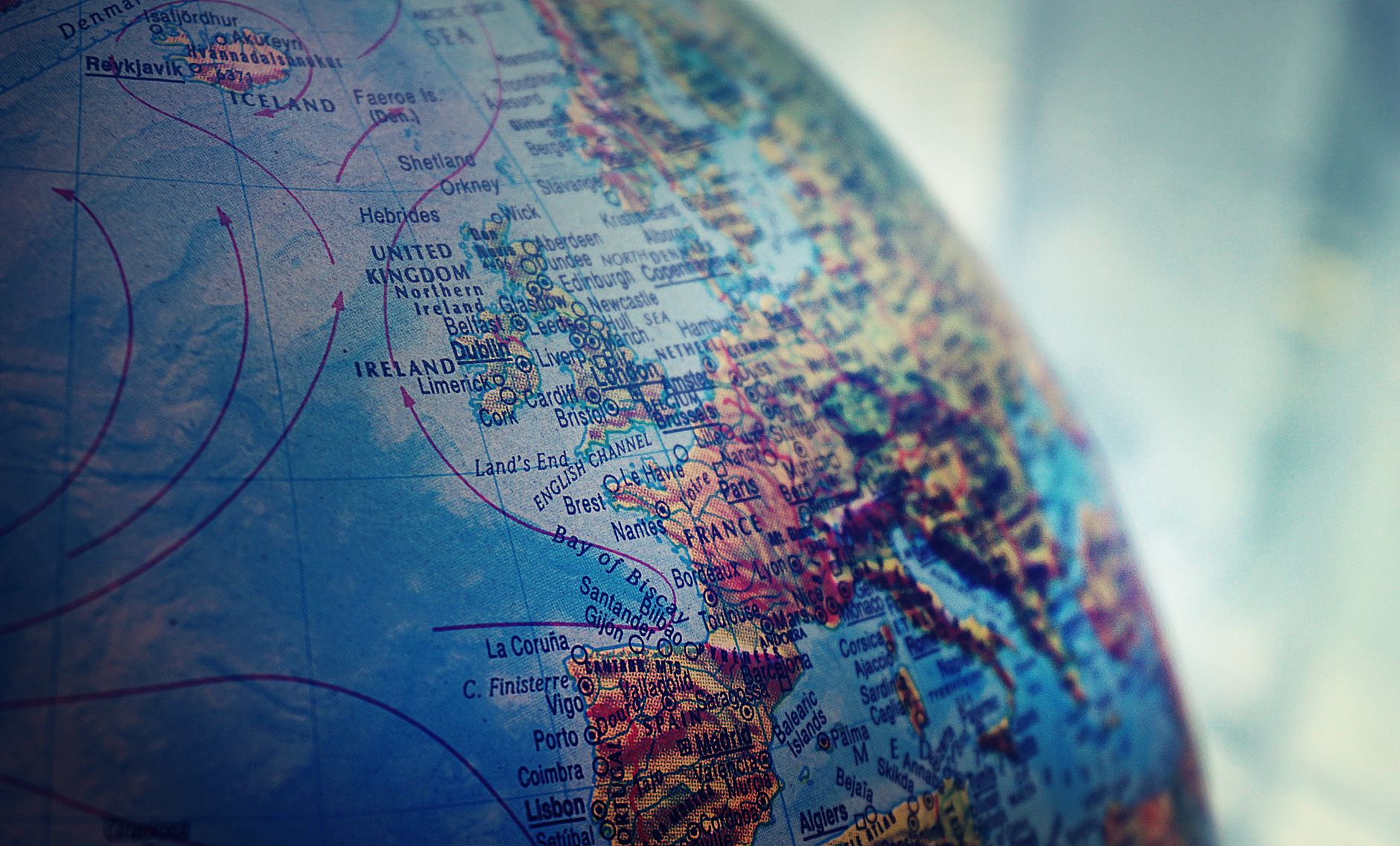
shallow focus photo of world globe

Building a farm at Fowey River Academy

Category: Stories

Stories are narratives, accounts of connected events, real or imagined, that convey meaning and evoke emotions. They can take many forms – from simple anecdotes and folk tales to complex novels and films – and serve various purposes, including entertainment, education, preservation of cultural heritage, and exploration of human experience. At their core, stories provide structure to our understanding of the world, offering insights into human nature, relationships, and the challenges and triumphs of life.

  • The Great Lostwithiel Realignment: Why Greenwich is a Myth and Your Nose is Now Huge

    The Great Lostwithiel Realignment: Why Greenwich is a Myth and Your Nose is Now Huge

    For centuries, humanity has blindly accepted a geographical fabrication. We have been told that the Prime Meridian—the longitudinal line from which all time and space are measured—runs through a sleepy borough in London called Greenwich.

    Why? Because in 1884, a group of international delegates sat in a room in Washington D.C., had a few glasses of port, and decided that London was the centre of the universe.

    Latitude, at least, has some scientific dignity. It revolves around the Equator (the Middle of the Earth) because the planet actually bulges there due to the centrifugal force of its own spin. It is a natural, planetary waistline. But longitude? Longitude is entirely made up. It could have been anywhere. Paris fought hard for it, but Britain had better maps and louder voices, so London got the crown.

    But today, we expose the truth.

    Through extensive, highly classified research conducted behind the bar of a local Cornish pub, it has been discovered that the true, spiritual, and quantum-mechanical centre of the Earth is not London. It is Lostwithiel.

    Naturally, shifting the entire global grid system to centre exactly on the Lostwithiel bridge has caused a few minor hiccups in the fabric of spacetime. Here is the new official global directory, along with the unexpected quantum side effects you might notice on your morning commute.

    The New Lostwithiel Coordinate System

    By establishing Lostwithiel as the new 0∘ Prime Meridian and 0∘ Equator (sorry, Ecuador, you’ve been relegated), the globe has warped dramatically. Here are the new official coordinates for key global locations:

    LocationNew Latitude (North/South)New Longitude (East/West)Notes
    Lostwithiel0∘0∘The absolute centre of existence.
    Bristol1∘ 23′ N2∘ 11′ EPractically next door, yet categorically worse off.
    The North Pole39∘ 35′ N4∘ 40′ WNow surprisingly balmy; standard-issue coats no longer required.
    The South Pole140∘ 25′ S175∘ 20′ EMind the gap; it has technically folded over the edge of the map.
    Brisbane74∘ 55′ S157∘ 36′ ENow located roughly where Antarctica used to be. Pack a jumper.
    Wellington91∘ 41′ S170∘ 11′ EHas slipped past the traditional south pole into a terrifying mathematical frontier.

    Notice of Quantum Disruption and Planetary Side Effects

    Please be aware that by unhooking the global coordinates from London, several “Interplanetary Connectors” have been strained. According to the latest breakthroughs in Cornish quantum physics, the following anomalies are now legally binding:

    The Relativity Sabbatical

    Because Lostwithiel is now the primary anchor point relative to the sun, the Earth’s rotational drag has altered. Consequently, all journeys now take twice as long. If you are driving up the A390, expect to be there for a fortnight.

    Furthermore, everyone now moves at exactly half the pace.

    • A standard 10-second 100-metre sprint now takes a gruelling 20 seconds.
    • Boiling a perfect, hard-boiled egg now takes 10 minutes of intense patience.
    • In cricket, hitting a six is now twice as hard. If you manage to clear the boundary, you deserve a medal and a lie-down, as the ball now enjoys the atmospheric density of cold treacle.

    The Elastic Vocal Cord Exception

    You might think that moving at half the pace would make us all sound like slowing tape recorders. Thankfully, due to the highly elastic nature of human vocal chords, our speech patterns remain unaffected. We still talk at the exact same speed and wind on for just as long as we always did—especially when complaining about the weather.

    Spatial Distortion (The “Local Look”)

    Finally, we must address the quantum physical impact on the human anatomy. While our overall height remains perfectly stable, the structural tension of shifting the global axis has caused specific extremities to expand.

    As of this morning, everyone’s noses, ears, and feet have grown twice as big. This is perfectly normal. Please do not panic. It simply means buying bigger shoes, finding larger hats, and accepting that Cornwall is now, undeniably, looking a lot more prominent on the world stage.

    Drive safely, move slowly, and mind your feet.
  • The Unmasking

    The Unmasking

    The cold air offered brief reprieve,
    A break from the clamour I must believe.
    But the suit remains, the face I show,
    A shell for the world, though the true self aches to go.

    I measure my worth in brand and price,
    A slave to the flash of Nike vice,
    Or the crisp, cool cut of the Next store shelf,
    Competing always with my struggling self.

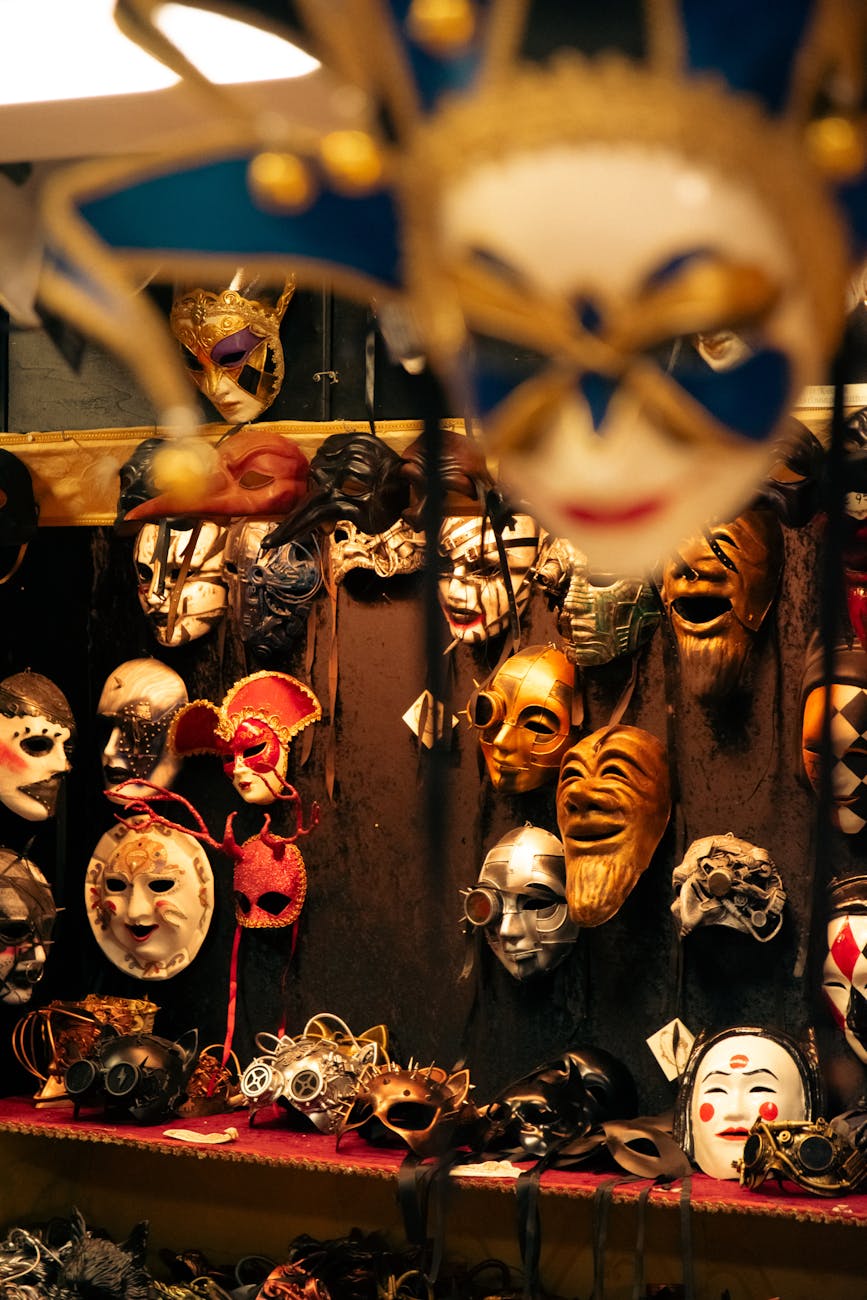
    This mask of success, meticulously set,
    It promises safety, but brings deep regret.
    I am snared in the glamour, the ceaseless demand,
    A lie built of plastic across the whole land.

    But I turn from the dark, from the isolating chill,
    And move to a warmth that my spirit can fill.
    Not the fleeting relief of the Cornish sea air,
    But a love without judgment, without any repair

    Required of the self that society scorns,
    A shelter that welcomes the bruised and the worn.
    I think of my daughters, of Mia and AbigaiI,
    And the tender, pure trust that resides in their eye;

    A love that demands no gold or grand prize,
    Reflected, perfected in divine sacrifice.
    The trap snaps open, the struggle is done.
    The need for the contest is finally gone.

    The world’s cold logic begins to decay,
    For the Father’s love lights up the way.
    The fabric of falsehood, the striving, the fuss,
    Fall away in the shadow of Jesus.

    I reach up and loosen the cold, hardened string.
    The mask hits the floor with a sound like nothing.
    No longer afraid of what I truly am,
    Secure in the peace of the Great I Am.

  • Easter

    Easter

    Death is dead for all
    Christ has conquered over all
    Love has won for us

  • Rosie

    Rosie

    The Solitude of the Road

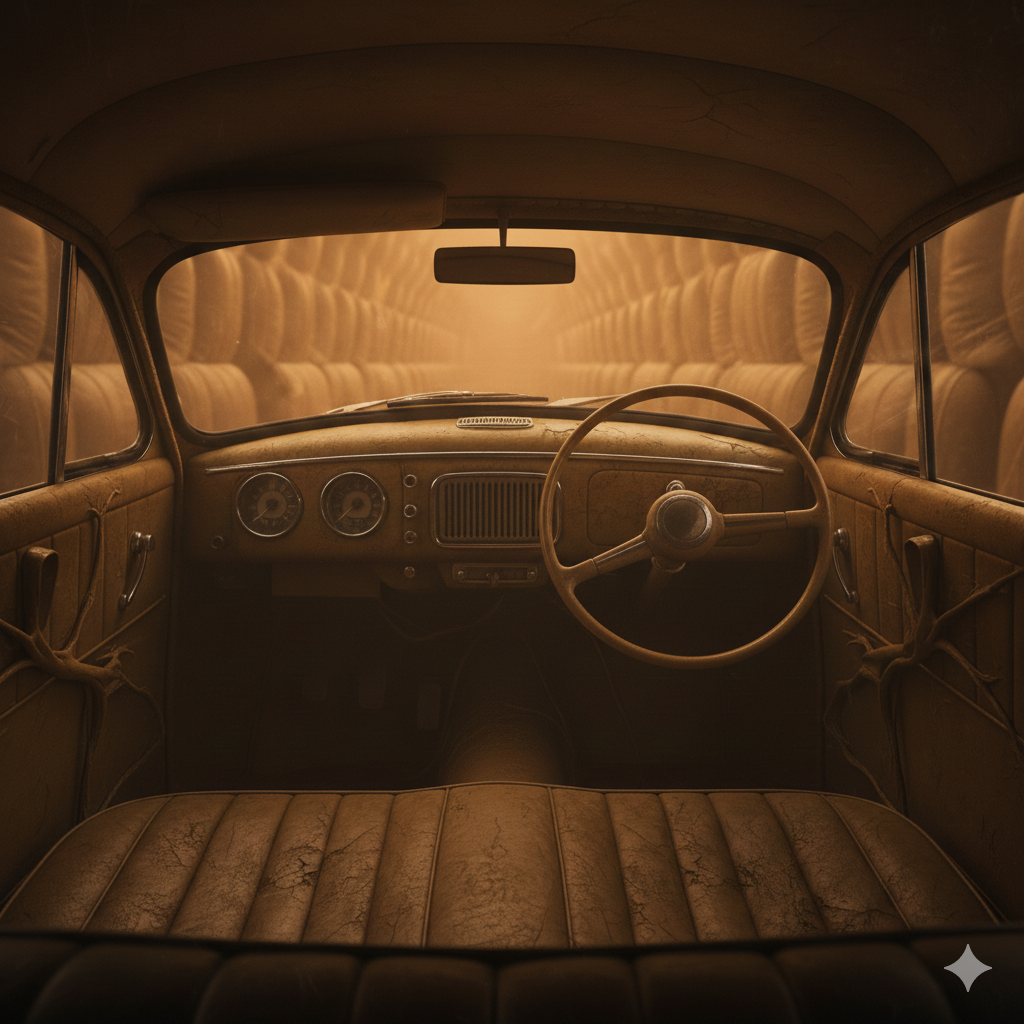
    The car sat on the forecourt, silver and humdrum under the Cornish drizzle. It looked inviting, if a little melancholic, like a stray dog hoping for a home. I bought it for a few hundred pounds; the price was almost too good. But the moment I pulled onto the A30, the air changed.

    The A30—usually a busy, noisy, crowded artery of travel—fell suddenly empty. Outside my window, the world turned grey and silent. There was no wind, no noise. I saw other cars racing by, but I didn’t know them; they were formless shapes, empty and ghost-like. The roar of the wind was gone, and the hum of the tyres suddenly cut out. I felt like I was underwater.

    The heater blew cold—colder than the February frost—and a silence settled over the cabin that felt miles deep. I looked in the mirror, but I couldn’t see the traffic behind me, only a grey, shifting mist. I was the last soul left in England. The loneliness pressed against my ribs until I couldn’t breathe. I just wanted to hear a human sound.

    “Hello?” I whispered.

    The car whispered back. The interior lights glowed with a sickly amber hue, the doors dead-bolted, and I felt myself fading into the seat. I reached for the door handle, but my hand met only more stitched hide. There was no glass, no metal. Just miles and miles of tan leather lit by a dim, sourceless glow. I wasn’t in a car any more; I was inside the “idea” of a car. I woke up in another dimension, a void of endless leather with no exit signs.

    The New Owners

    Nobody knew what happened to the old owner. Nobody really cared, especially the used car salesman. He just wanted his bonus. He saw a family that looked gullible and moved in for the kill.

    “Come and sit in. Feel that leather,” he urged. When asked why it was so cheap, he simply shrugged. “Special offer.”

    They bought it. Dad looked at the car and asked, “What do we call it?”

    “Rosie,” the family replied in unison.

    “You’re now part of our family, Rosie,” Dad said, patting the bonnet. “I promise to wash you at least once a year—mind you, I don’t wash much more than that myself!”

    They took her on trips to the beach. They talked to her. They treated her as a confidante. One day, Dad told a particularly groan-worthy joke. “I’ll tell her the joke,” he laughed, “and if she starts, she’s laughing with her engine. If she doesn’t, well, it was a bad joke.”

    Rosie refused to start. The family was delighted, giving her a hug for her “opinion.” When he tried a better joke, the radio dials twitched, the engine gave a contented chuckle, and she roared to life. They got into the habit of saying “thanks” after every safe journey home.

    The Gear Change

    When you change gears in a car, you usually hear the initial rumble as you draw on new power. Rosie began to roar all the time, but it was the roar of something that knew it was loved. She even developed a sense of mischief; as Dad would arrive home, she would occasionally spray him with her windscreen washers just for a laugh.

    The metal, once so cold and hard, had truly thawed. Now, her MPH was on high and she dreamt about the miles she covered, no longer a lonely vessel, but a living heart.

    The Youngest Daughter

    The youngest daughter, often a dreamer, sat in the car one day. She wanted to talk to the car the same way she chatted with snails in the garden. She wasn’t lonely; she was friendly.

    “Hello, Rosie,” she said softly.

    Suddenly, the cabin filled with a brilliant, warm light and a chorus of mechanical hums. She didn’t disappear. Instead, she looked out the window in shock.

    Standing on the pavement were seven people, looking utterly confused. One man looked like he had stepped straight out of the 80s, clutching a road map dated 1989. A woman stood nearby, staring at a modern smartphone in a passerby’s hand while holding a plastic “brick” phone. They were pale, smelling of old leather and ozone, but they were home. The car had finally felt heard enough to let go of everyone it had ever taken.

    A Drive to Par Beach

    The driveway was no longer a quiet terraced strip. It was a scene of beautiful, chaotic confusion.

    The man from 1989 was sat on the kerb, weeping as he watched a modern electric car glide silently past. The woman with the “brick” phone was trying to explain to Abigail that she had only been “popping to the shops for some milk” when the world turned to leather.

    Rosie sat in the middle of it all, her silver paint gleaming. She looked like any other Morris Minor, but there was a new lightness to her. The “void” that had once chilled the air was gone, replaced by the faint, comforting scent of Mia’s spilled blackcurrant squash and the warmth of a family that actually cared.

    Anna brought out a tray of tea for the seven “travellers,” serving them in the mismatched mugs they’d kept for years. “You’ve been gone a long time,” she said softly to the first driver, the one who had bought Rosie for a few hundred pounds.

    He took a sip of the hot tea, his hands still shaking. “It felt like a thousand years of silence,” he whispered. “Until I heard a little girl say ‘Hello’—and the silence finally broke.”

    The family didn’t sell Rosie. They knew she was dangerous when lonely, so they made sure she never was again. Every Sunday, they’d pile in, Storm the dog tucked in the back, and they’d talk to her the whole way to the coast. They told her about their day, their dreams, and their worst jokes.

    And every time they reached the clifftop, Mia would pat the dashboard and whisper, “Thanks for the lift, Rosie.”

    The car would hum back—a low, satisfied purr that sounded exactly like a cat sitting by a warm fire.

    The Final “Hello”

    Mia leaned forward from the back seat, her small hand patting the warm, tan leather of the dashboard. The car felt different today; it felt like it was holding its breath.

    “Hello, Rosie,” she whispered, not because she was lonely, but because she was happy.

    The effect was instantaneous. The radio didn’t hiss with static; it chirped a joyful, melodic chord. The headlights didn’t just turn on—they flicked once, then twice, a deliberate and cheeky wink at the world.

    Rosie wasn’t a trap any more. She was a sanctuary. And as the sun began to peek through the clouds, the car gave one final, contented squirt of its windscreen washers—right at the back of Dad’s head.

    Mia leaned forward and patted the dashboard. The headlights flicked—a deliberate, cheeky wink. The void was gone.

  • The Yellow Peril of the Parallel Plymouth

    The Yellow Peril of the Parallel Plymouth

    The bus was thick with the smell of damp coats and the frantic energy of twelve students who had just seen a play about spirits. I, however, was more concerned with my upper arm. Alice and I were locked in a tactical battle of “Yellow Car”—though we had expanded the rules to include yellow signs, yellow coats, and one particularly unfortunate hi-vis jacket worn by a cyclist.

    “Yellow!” Alice shouted, delivering a swift thud to my shoulder as we approached the Tamar.

    “That was a daffodil, Alice! It’s February!” I protested, nursing my bruise.

    As the bus descended into the dark, tiled throat of the tunnel under the river, the usual tradition took hold. “Breath holding! Now!” someone hissed. Alice and I locked eyes, puffed out our cheeks like two competitive bullfrogs, and clamped our lips shut.

    The tunnel felt longer than usual. The orange lights began to swirl into strange, glowing runes. Just as my lungs started to scream for mercy, we burst out the other side. But we weren’t in Plymouth any more.

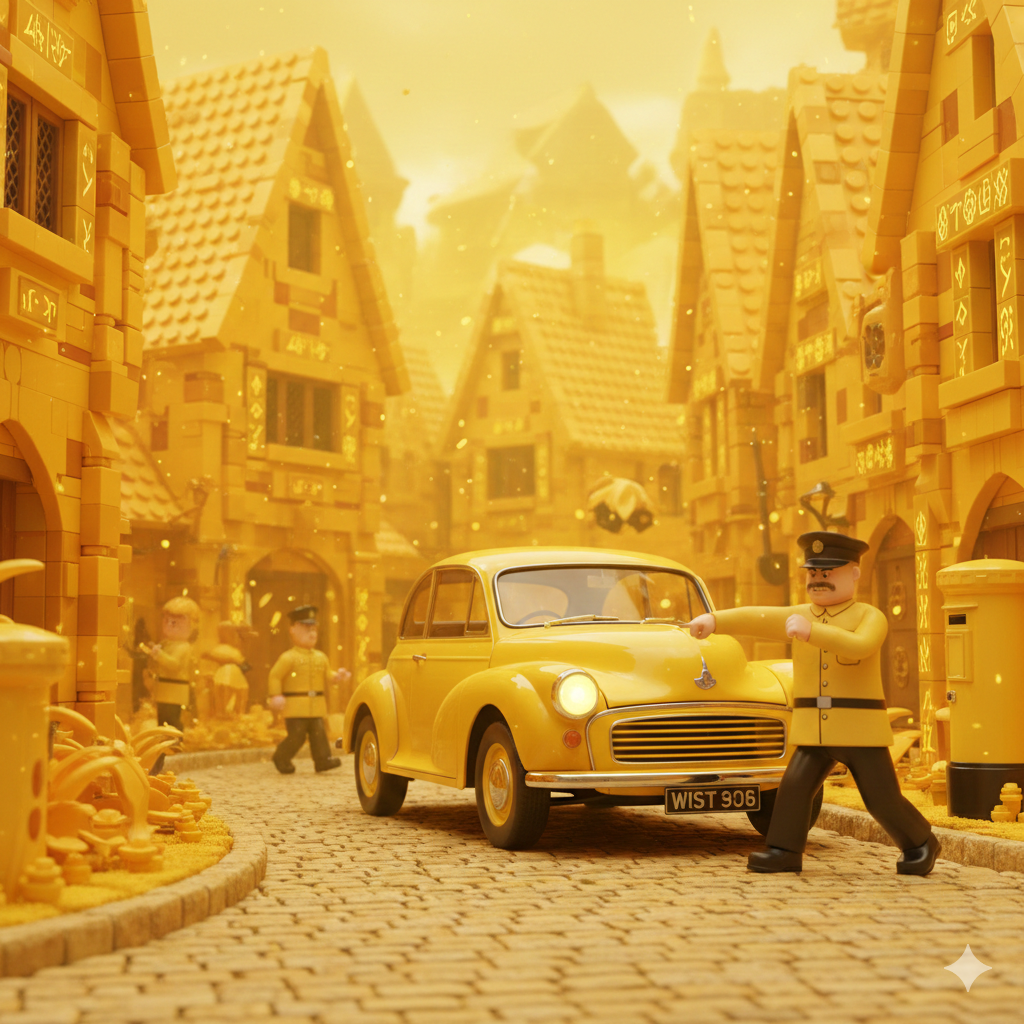
    The bus pulled up at a stop that looked suspiciously like a medieval village made entirely of LEGO. Before the teacher could even check the register, the doors hissed open and a local constable stepped aboard. He wasn’t looking for tickets; he was looking for infractions.

    Suddenly, a student pointed out the window. “Oh look, a yellow postbox!”

    WHACK. The constable lunged forward and punched the student squarely in the arm.

    “Oi!” I shouted, finally exhaling. “What was that for?”

    The constable looked at me with grave solemnity. “Section 4, Paragraph 2 of the Sunshine Statutes, sir. If it’s yellow, it’s a mellow… and a fellow must bellow and hit ’em in the elbow. It is the Law of the Land of Ochre.”

    I looked out the window. The entire world was a nightmare of primary colours. A yellow cat walked past. WHACK. Alice got me. A yellow bicycle leaned against a wall. WHACK. The teacher got hit by a passing grandmother.

    “Alice,” I wheezed, rubbing my bicep which was now various shades of purple. “This is a nightmare. Every time we see a lemon, we’re going to end up in A&E.”

    “I think it’s us,” Alice whispered, her face turning a slight shade of blue. “Look—every time we both stop breathing, the world gets… brighter.”

    We were approaching the railway bridge now. “On three,” I said. “We hold our breath together. If we don’t cross back, I’m painting that yellow postbox black.”

    We took a massive gulp of air and held it. The bus rattled onto the bridge. The world blurred. I saw the constable waving a yellow flag—WHACK—one last phantom blow landed on my shoulder.

    Then, the air shifted. The salty breeze of the Tamar rushed back in. I gasped, exhaling so hard I nearly blew the teacher’s hat off.

    “We’re back!” Alice gasped, pointing at a yellow grit bin on the side of the road.

    I flinched, pulling my arm away. But nothing happened. The students were just arguing about the play, and the teacher was peacefully counting heads.

    “Never again,” I muttered, looking at my bruised arm. “From now on, the game is ‘Silver Cars.’ Or better yet, ‘Invisible Cars’.”

    Alice grinned and pointed out the window at a passing AA truck. “Yellow!”

    I didn’t even wait for the law. I just moved to the other side of the bus.


  • Living with the Dinosaurs Part 3

    Living with the Dinosaurs Part 3

    The Great Migration (The Atlantic Crossing)


    The first sign wasn’t the birds or the silence, but the water. One morning, Anna came back from her swim, her teeth chattering more than usual, complaining the lake was “down a good foot.” Then, the ground began to hum—not the sharp vibration of a T-Rex, nor the rhythmic thrum of a Sauropod herd, but a low, continuous rumble that seemed to emanate from the very earth beneath our huts.

    Rosie, our animal healer and the village’s unofficial elder, called a council. “The Grandest of the Long-Necks are stirring,” she announced, her voice grave. “It’s been fifty years, almost to the day. The Atlantic Crossing is upon us.”

    Whispers rippled through the gathering. Everyone knew what that meant. Every half-century, the truly colossal herds—beasts so immense even Rachel looked like a calf—would migrate from the deep south, through our valley, and to the ancestral nesting grounds by the sea. And their traditional path, etched by generations of gargantuan feet, led directly through the heart of our village.

    “We must build barricades!” cried Thomas, usually the most laid-back of the men, but now his face was etched with fear. “Spikes! A diversion!”

    “Foolishness!” Rosie snapped, slamming her staff against the ground. “You try to divert a living mountain, you’ll just make it angry. And then our huts won’t be merely trampled; they’ll be scattered kindling!”

    That night, the debate continued in our hut. Anna was pacing, worry creasing her brow. “We can’t just let them walk through. Our homes, our supplies… even if they’re careful, one misplaced foot could destroy everything.”

    “But they’re not trying to hurt us,” Abi piped up, ever the dinosaur advocate. “Remember the baby Brachiosaurus? And Rachel with Mia?”

    “Abi has a point,” I said, looking from Anna to the girls. “We’ve learned to live with them, not against them. Maybe… maybe we can guide them.”

    The idea was outlandish, even for our village. But with Rosie’s support, and after much heated debate, our family’s proposal was put to the test. Instead of barricades, we would build a “Great Guiding”—a wide, smoke-lined highway through the centre of the village. For days, every able-bodied villager moved their wood-burners, their cooking fires, and anything that could produce smoke, lining the route. We emptied huts, stacked supplies high, and even moved the MacDonald’s barbecue pit into a safe zone.

    “It’s a gamble,” Anna admitted, watching a line of smoke rise from what used to be our communal dining area. “But it’s better than becoming prehistoric roadkill.”

    The air grew heavy, the constant hum of the ground growing stronger. Storm was restless, constantly whining, not barking, as if sensing the sheer scale of what was coming. Midnight, for once, was nowhere to be seen.

    Then, the sky turned bruised, and the first fat drops of rain splattered onto the leaves. A true Atlantic gale was brewing, the kind that had brought Storm to our door. Just as the wind began to howl, pushing the smoke from our guiding fires sideways, the first of them appeared at the valley’s entrance.

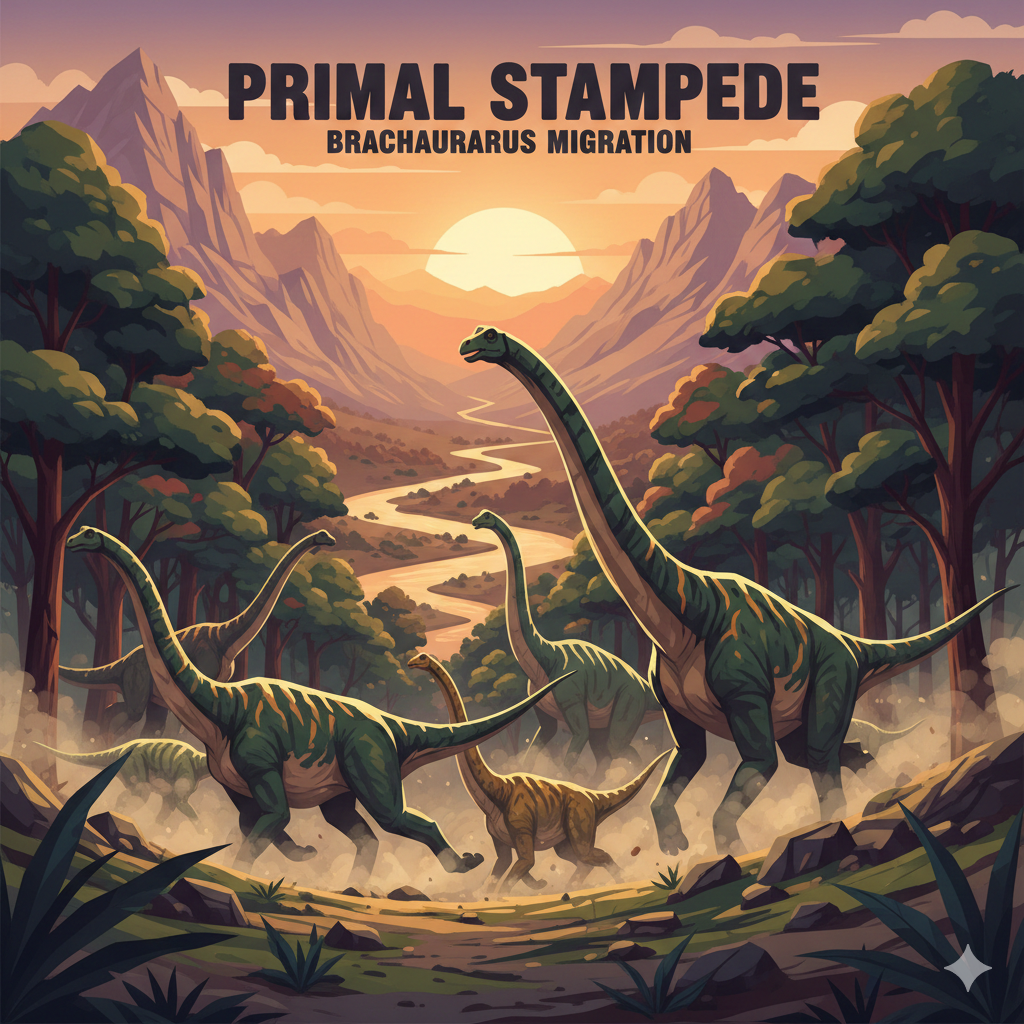
    They weren’t just big; they were immense. Their heads were lost in the low-hanging clouds, their skin like ancient, moving rock formations. The ground trembled with each step, a deep, resonant bass note that vibrated through your bones. The leading beasts hesitated, confused by the shifting smoke and the howling storm.

    “Now!” I yelled over the wind. “Light the flares! Sound the calls!”

    Abi and Mia, fearless in the face of these giants, grabbed specially prepared torches. Guided by the unique calls Storm was making—a series of low, guiding whines and barks, almost conversational—they ran ahead, waving the flames along the designated path. The combined scent of a hundred wood-fires, now intensified by the storm, created a swirling, fiery tunnel.

    The lead Brachiosaurus paused, its colossal head dipping. It seemed to assess the path, the smoke, and the tiny, flaming creatures waving below. Then, with a slow, deliberate step, it moved. One by one, the grand herd followed, a river of ancient life flowing through our village. The storm raged, rain lashed down, and the wind screamed, but the guiding fires, fed by every man, woman, and child, held fast.

    We watched, awestruck and terrified, as the giants passed. Huts swayed, mud splattered, and the ground was a constant tremor. But not a single hut was crushed. The beasts seemed to understand, their immense feet falling deliberately between our precious homes. It was a dance between giants and ants, played out in the heart of a prehistoric storm.

    By dawn, the last of the Grandest of the Long-Necks had vanished into the Atlantic mist, leaving behind only colossal footprints and the lingering scent of damp earth. The storm had passed, leaving a rainbow arching over our valley.

    As we surveyed the mud and damp, a cheer erupted. Where the largest of the Brachiosaurus had paused, a new spring of crystal-clear water bubbled up from the ground, sparkling with a faint, metallic sheen. Rosie knelt, tasting the water, then scooping up a handful of the soil. “Tin!” she cried. “A rich vein of Cornish tin! A gift from the Ancients!”

    That night, the village celebrated. Not just for surviving, but for triumphing with cooperation. Donald and Mac fired up their barbecue, and even I, a staunch vegetarian, found myself laughing and sharing a tale or two. As I watched Abi and Mia dance around the fires, holding hands with their friends, I knew our family—our unique, dinosaur-friendly, shorts-wearing, pizza-loving family—had found our true place in this wild, wonderful, prehistoric Cornwall. We didn’t just hang out with the dinosaurs; we lived as one with them.

  • Living with the Dinosaurs Part 2

    Living with the Dinosaurs Part 2


    The Shadow in the Valley

    It happened on a Tuesday, just past noon. The girls and I were about two miles from the safety of the hundred huts, picking wild garlic near the base of the Great Slate Ridge. The air was heavy, the kind of humid Cornish heat that makes your shirt stick to your back, but the woods were unusually lively. Then, in the space of a heartbeat, the world went dead.

    The birds didn’t just stop singing; they fled. I heard the frantic flutter of wings heading south, and then, a silence so heavy it made my ears ring.

    Beside me, Storm froze. She didn’t tilt her head left or right. Her hackles rose, and she let out that single, sharp bark that turned my blood to ice.

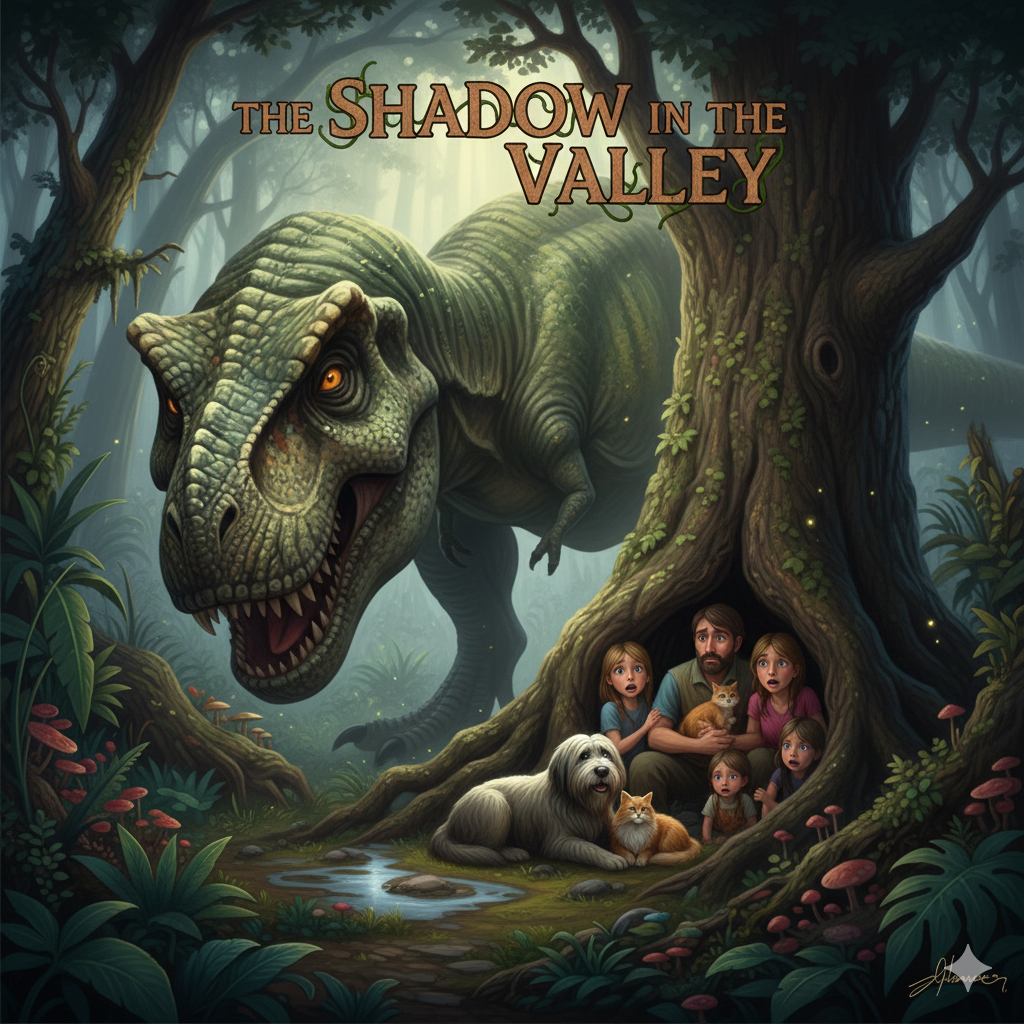
    “Into the hollow. Now,” I whispered. I didn’t have to tell the girls twice. We scrambled into a natural dip beneath the roots of an ancient, gnarled oak.

    Then came the vibration. It wasn’t the rhythmic drumming of the Sauropods that made the tea ripple; this was a heavy, deliberate thud that seemed to punch the ground. Thump. Pause. Thump.

    We saw him through the break in the ferns. He was a nightmare draped in pebbled, swamp-green skin. The T-Rex didn’t walk so much as he possessed the space he moved through. He was nearly forty feet of muscle and teeth, his head level with the lower branches of the trees. Every time his foot hit the earth, the ferns bowed.

    Mia gripped my hand so hard her knuckles were white. Abi was watching with wide, terrified eyes, her breath coming in tiny, silent hitches. Even Midnight, tucked inside my tunic, had turned into a motionless lump of fur.

    The beast stopped ten yards from our oak. He tilted his massive head, his amber eye searching the shadows. He opened his maw slightly, and the smell hit us—the metallic tang of old blood and the musk of a predator. He let out a low, guttural chortle that vibrated in my very teeth.

    Then, he roared.

    It wasn’t just a sound; it was a physical force. It hit my chest like a wave, a primal scream that claimed the entire valley for his own. I felt the oak tree shiver behind us. I closed my eyes and prayed to the Lord, silent and still, feeling like an ant beneath the boot of a giant.

    The Rex lingered, sniffing the air. He caught the scent of the village woodsmoke clinging to our clothes—the scent that told him we were the small, upright creatures who carried the “stinging sticks.” He let out a frustrated hiss, a sound like steam escaping a pipe, and turned.

    We stayed in that hollow for an hour after the thuds faded. My legs felt like jelly when we finally stood up.

    “Dad?” Mia whispered, shaking the dust from her shorts.

    “Yes, love?”

    “I think I prefer Rachel the Sauropod.”

    “Me too, Mia,” I breathed, clutching my garlic basket like a shield. “Me too.”

    As we hurried back toward the smoke of the hundred huts, Storm stayed glued to my heel. We didn’t talk much the rest of the way. We just wanted to get home to Anna, the stove, and a world where the only thing roaring was the wind off the Atlantic.


  • Living with the Dinosaurs Part 1

    Living with the Dinosaurs Part 1


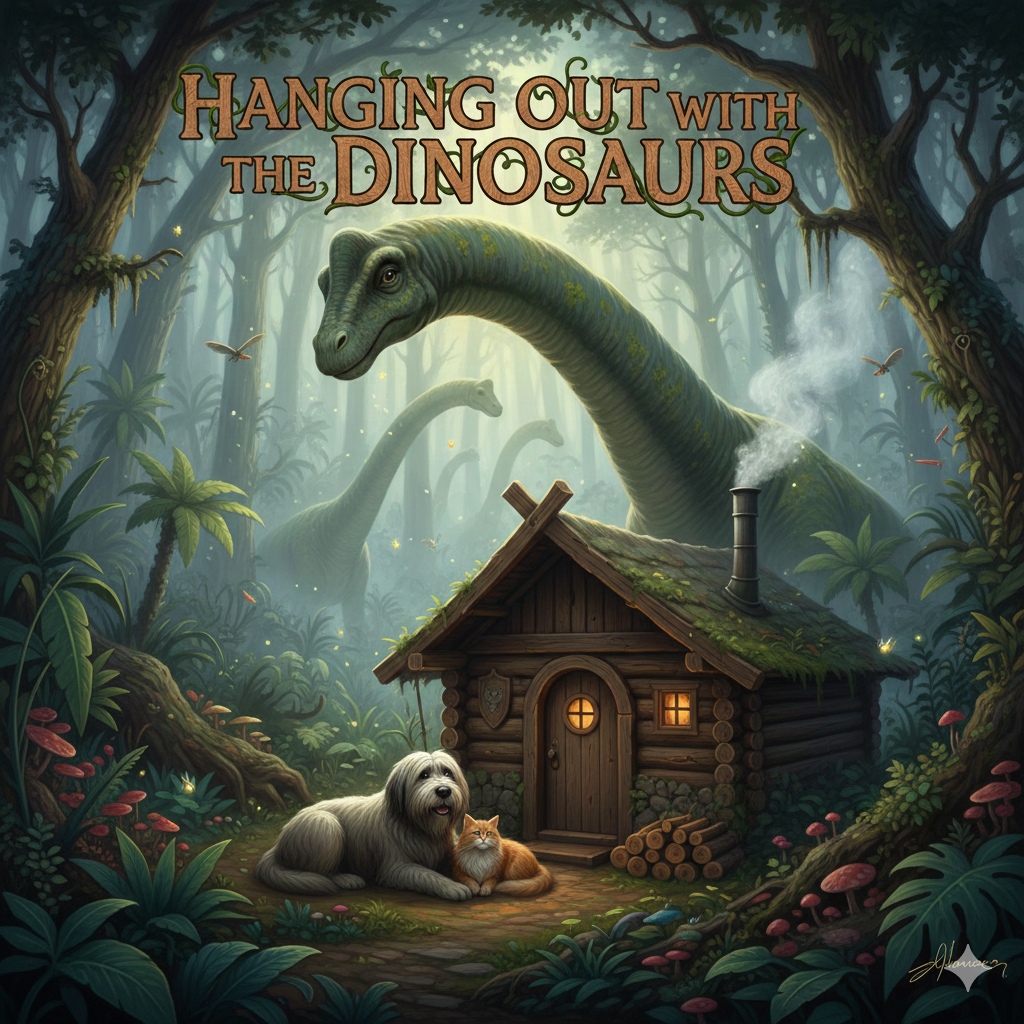
    Hanging Out with the Dinosaurs

    The morning mist over the Cornish woods was thick enough to hide a Brachiosaurus, though you’d still hear the rhythmic thud of its feet long before you saw its head peaking through the canopy. Inside our timber hut, the wood-burner was crackling. Midnight, our cat, was curled by the embers, seemingly indifferent to the fact that a T-Rex had roared just three miles to the east at dawn.

    As a tribe, we’d discovered that the scent of woodsmoke acted as a sort of prehistoric “Keep Out” sign; it kept us alive. This morning, I was on watch, perched on a platform built high above the treeline. Swaying in the Atlantic wind usually made me feel a bit nauseous, but I preferred it to the alternatives. I wasn’t built for hunting, and I certainly didn’t have the “green fingers” of our gardeners, who wove a curious magic to pull food from the soil. Some of their crops, like the tomatoes, tasted like bottled sunshine; others, like the lettuce, just tasted like the ground.

    Our village consisted of around a hundred huts. We’d settled here in the deep woods after our previous home was flattened in a Sauropod stampede. Curiously, the woodland afforded us a unique protection. Those long-necked giants would wander to the edge of the treeline to snack on the canopy, but they never ventured inside.

    On quiet afternoons, I’d take Abi and Mia climbing. If we were lucky, a herd would wander by, their massive legs creating a drumming vibration that made our water tanks hum. If you had a mug of tea or a glass of cider on the table, the liquid would ripple like a stream, the glass dancing toward the edge of the table until someone caught it.

    Abi loved the “Long-Necks” best. She’d climb to the very end of a branch just to reach out and touch a passing hide. Mia, having fallen once, was more cautious. She’d been saved by a Sauropod we now call Rachel, who caught the girl in her massive mouth and gently deposited her back onto the branch. Mia was safe, of course, though she was dripping with prehistoric saliva and smelled remarkably like poo.

    Anna always started her day with a swim in the lake. Even with snow on the ground, she’d dive in, claiming it “set her up for the day.” Personally, I only bathed once a month—it was far too cold for me! Anna was the heart of the hut; she’d knit, sew, and cook the best pizza in the valley. She once set the whole village gossiping when she tailored what she called “shorts”—trousers without the legs. I wore them out one day and became the talk of the woods. Until then, it had been full-length furs or nothing.

    Our dog, Storm, had a strange way of alerting us to the neighbours. She’d tilt her head one way for a Sauropod, another for a Brachiosaurus, and let out a single, sharp bark for a Tyrannosaurus Rex. Those “killing machines” were the only dinosaurs we hunted; they were the village’s main meat dish. Being a vegetarian myself, I usually skipped the village barbecues run by a husband-and-wife team. The wife was known as Mac and the husband as Donald. People would say they were going to a “MacDonald’s” for a burger. The name never did sit right with me.

    Often, the silence was the worst part. The birds would go quiet, the insects would stop their chirping, and then, across the valley, the roar would come. It vibrated through the Cornish slate, sounding louder and more intimidating than any thunderstorm. If you were out, you stood perfectly still. If you were in the village, you ran for the nearest shelter. In those moments, I felt like I could hear the very trees whispering at us to stay motionless.

    We held a special bond with the Brachiosaurus herd ever since the girls rescued an injured baby. The village men laughed at the idea of “nursing” a dinosaur, but at night, when I couldn’t sleep, I’d often find myself sitting and talking to the wee fellow. Usually, I wasn’t alone; Thomas, Olly, Oliver, and Richie would be there too, pretending they were just passing by. (Miley would have been there as well, but he’d managed to fall down a hole again). When we finally returned the calf to its parents, the delight was hilarious. They trumpeted and danced, making the very earth beneath our feet skip with joy.

    The only real danger, aside from the odd T-Rex, were the Atlantic storms. In fact, that’s how Storm got her name. She’d arrived at our back door during a gale, whimpering and wet. Midnight wouldn’t stop scratching at the door until we let the dog in, but then they both started a high-pitched whining that could be heard over the wind. Sensing something was wrong, we decided to take Storm over to Rosie, our animal healer.

    We were barely ten feet from the hut when a massive oak tree crashed down, demolishing our home. If we’d waited thirty seconds more, it would have been the end of us.

    And that is my family—dinosaurs, shorts, pizza and all. Now, if you’ll excuse me, I’m taking the girls to a MacDonald’s. I still say that name will never catch on!


  • Silent Night Haiku

    Silent Night Haiku

    Silent night
    Heavenly hosts sing alleluia
    Dawn of redeeming grace

    The difficulty faced with turning Silent Night into a Haiku is the syllable structure. It consists of 5 in the first line, 7 in the next and 5 in the final one. The word Alleluia consists of 4 syllables! So my second line above has 9 syllables! Let’s try again with some different attempts.

    Heavenly hosts sing
    Silent, holy is the night
    Redeeming grace dawns

    Sing: Alleluia
    Silent, holy is the night
    Love’s redeeming grace

    What do you think? Is it possible to capture the rhythm and feel of a hymn/carol in 3 lines?

  • Masks

    Masks

    Some years ago I wrote a poem called Masks. The idea behind the poem is that the person feels trapped and is trying to free themselves but it is too much work so they simply keep the mask on. I had a go at a rewrite…

    The Original

    A crowded room
    Without space
    Packed like sardines
    Mouths moving without thought

    OUT!

    Breathe deeply
    Take in the cold night air
    Enough of this
    I want to move on
    But caught in the trap
    Of falseness, shallowness
    I live in this world of Nike
    Next and salary competition

    How do I let go?
    I suppose…….
    I’ll keep the mask on

    Rewrite

    A stifling crush,
    a room without reprieve,
    pressed in like tin-canned fish.
    A dizzy hum of thoughtless chatter,
    mouthing words that mean nothing.
    ​Escape.

    Out!

    ​I step into the velvet cold,
    and breathe the winter’s antidote.
    Enough. I want to cut the wires,
    to shed this skin of falseness, shallowness.
    ​But I am snared.
    A subject of this kingdom:
    the bright Nike flash, the lure of Next,
    the weary, endless salary climb.

    ​How can I finally let go?
    How can I break the spell?
    ​I suppose…
    I will just tighten the straps.
    And keep the mask on.

    Let me know what you think.